

















By Carlos Reinoso, Director General, European Tissue Symposium
There is a tendency, in policy circles and beyond, to treat tissue paper as a commodity – a background product so mundane it barely warrants strategic attention. That assumption is wrong, and increasingly, the data to challenge it is compelling.
The European Tissue Symposium commissioned an independent socioeconomic impact study – carried out by Steward Redqueen and covering 42 countries across the continent – to assess, rigorously and comprehensively, what this industry actually contributes. The findings should reframe the conversation.
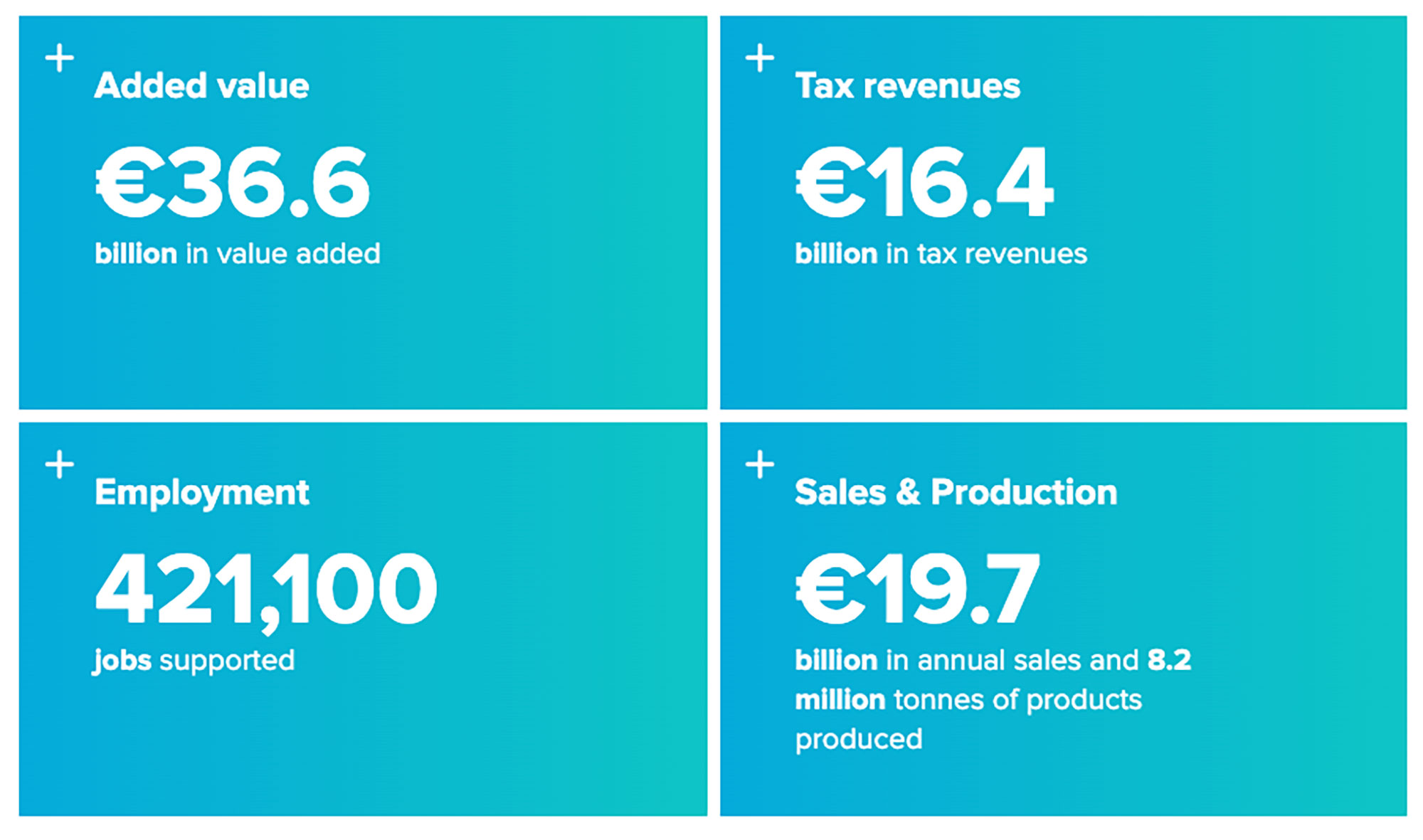
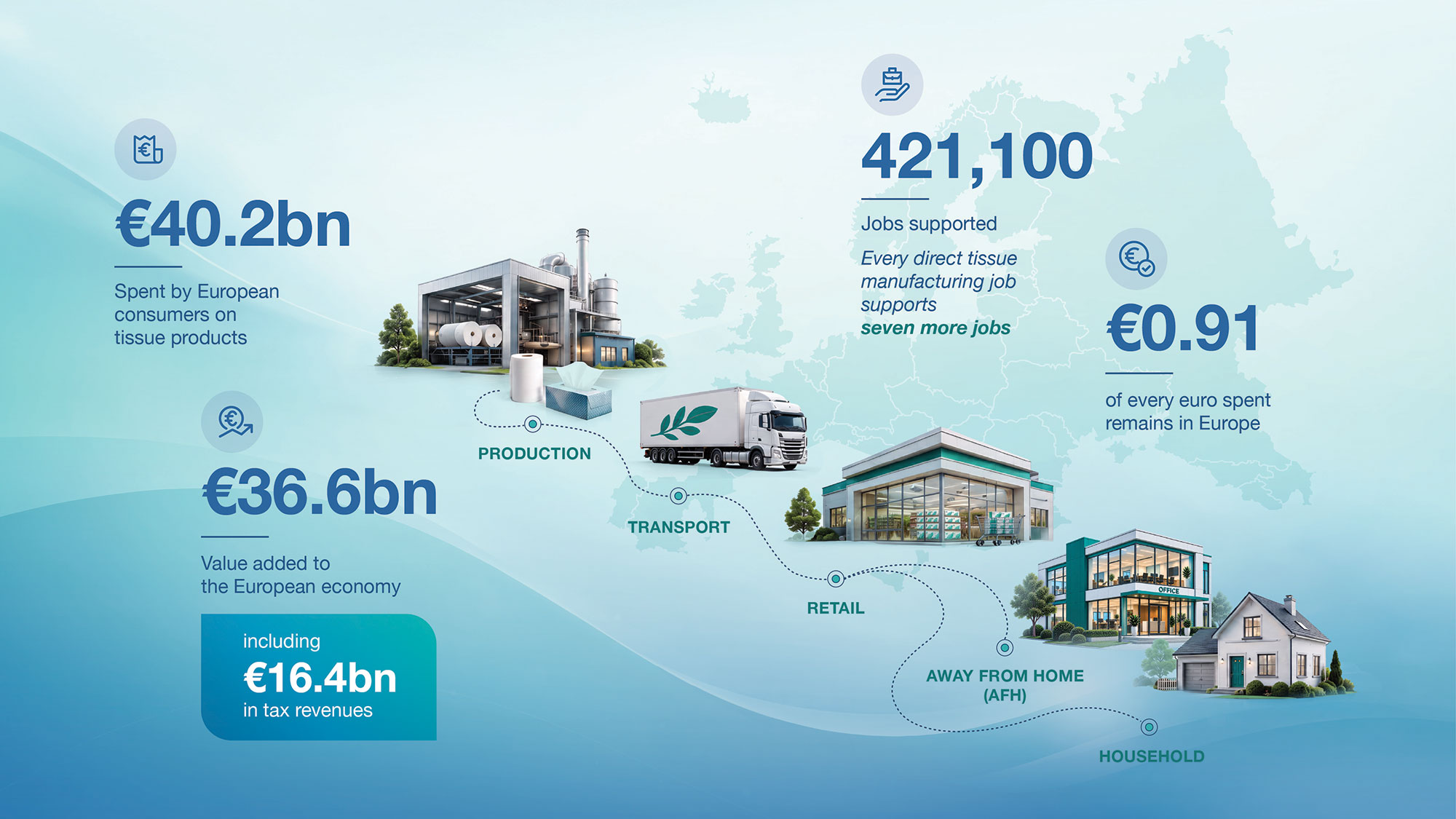
Europe’s tissue sector generates €36.6bn in value added, supports 421,100 jobs, and produces €16.4bn in tax revenues annually. Annual sales reach €19.7bn. For every €1 spent within the industry, €0.91 stays in Europe. This is not a marginal activity. It is a deeply embedded part of Europe’s economic and social infrastructure.
And yet the industry finds itself at a difficult intersection: essential in practice, but too often overlooked in strategic and policy discussions, while being squeezed from multiple directions simultaneously. Understanding that tension – and the forces currently reshaping the market – is what this article is about.
Why this industry matters more than it appears
Tissue products occupy a paradoxical position: they are part of the fabric of everyday life, yet their importance is often most visible when they are suddenly unavailable. The pandemic brought that reality sharply into focus, as unprecedented consumer demand and pressure on supply chains demonstrated just how fundamental products such as toilet tissue and kitchen towel are to households and hygiene.
That shift in perception matters. The socioeconomic study confirms what those of us inside the industry have long argued: tissue is not simply a product. It contributes to hygiene, public health and the functioning of homes, workplaces, healthcare environments and public spaces.
The study also explores the potential societal benefits associated with paper hand towels. Its exploratory modelling estimates that switching EU public bathrooms to paper towels could prevent up to 9.8m influenza infections annually and generate up to €1.47bn in GDP benefits through higher productivity and fewer sick days. While this modelling relates specifically to hand drying, it illustrates the broader societal value created by a product category that is too often taken for granted.
The industry’s value chain is also a model of European resilience. Upstream forestry, pulp, packaging, energy and logistics connect directly into tissue manufacturing, which in turn feeds a downstream network of distributors, wholesalers and retailers.
The study found that the industry spends €13.5bn with European suppliers, representing 90% local sourcing, while €0.91 of every €1 spent remains within Europe. In an era of renewed interest in strategic autonomy and resilient European supply chains, that local economic footprint deserves greater recognition.
The pressure points are real and cumulative
Acknowledging the industry’s strengths does not require minimising its challenges. The pressures facing European tissue producers today are structural, not cyclical – and they are compounding.
Energy affordability remains one of the most significant concerns for European producers. Tissue manufacturing is inherently energy-intensive, and the ability to access energy at internationally competitive prices has become increasingly important to decisions about investment, capacity and the long-term competitiveness of European production.
This concern is shared across the industry. In discussions with European tissue manufacturers, affordable energy, efficiency, carbon reduction and the need for predictable and harmonised regulation consistently emerge as interconnected priorities. Companies can and are investing in transformation, but the conditions surrounding those investments matter.
Global competition is intensifying. Non-European producers are moving quickly, often operating within different cost and regulatory environments. The risk of gradual European underinvestment is real. Underinvestment tends to precede closures – and once industrial capabilities, skills and know-how migrate, they are extremely difficult to rebuild.
The regulatory environment adds a further layer of complexity. The industry is firmly committed to the EU’s overarching ambitions on climate, circular economy, packaging, deforestation and the energy transition. At the same time, a constructive and pragmatic approach to the policy instruments, implementation timelines and sequencing will be essential to ensure that these ambitions can be delivered effectively.
The sector also enters this transition with a substantial sustainability foundation. The socioeconomic study reports that 62% of energy used by the pulp and paper sector comes from renewable sources, CHP efficiency reaches 95.7%, 92% of process water is reused, and most fibres originate from FSC or PEFC-certified sustainable sources and paper for recycling. The sector is firmly working towards carbon neutrality by 2050.
The problem is not ambition. The problem is the cumulative weight and coherence of what is being asked, and the speed at which it is arriving. Climate, energy, circularity and industrial policy are not always moving in coordination. Regulatory layering without sufficient alignment raises complexity and uncertainty precisely when producers need long-term investment confidence. The debate in Brussels should not be framed as ambition versus industry. It should be about how to deliver both together.
Consumer expectations are shifting the terrain
Regulation is not the only external pressure reshaping the industry. Consumer expectations are evolving in ways that are both an opportunity and a challenge. For tissue paper producers, the challenge is increasingly one of delivering more on several fronts at once. Consumers continue to expect softness, strength, absorbency and reliable performance, while sustainability considerations are becoming more prominent in purchasing decisions and in the expectations retailers place on suppliers. At the same time, cost-of-living pressures mean that value remains a powerful consideration.
This creates a more complex market for both branded and private-label products. Manufacturers must balance performance and affordability with demands around responsible fibre sourcing, resource efficiency, packaging and lower-impact production. These are not necessarily competing objectives, but achieving them simultaneously requires continuous innovation and investment. The response is already visible across European manufacturing: diversification of fibre sources, greater use of recycled and alternative fibres where appropriate, investment in energy efficiency and decarbonisation, improved water management, and continued work to maximise resource efficiency throughout production. What matters now is ensuring that European producers have the economic and regulatory conditions to continue making those investments while remaining competitive in their home market.
Europe’s competitiveness question
Taken together, these pressures point to a more immediate question than predicting what the tissue industry will look like a decade from now: can Europe maintain the conditions necessary for a strong domestic tissue manufacturing base today? The challenge, therefore, is not a lack of willingness to adapt, but whether the conditions described above allow European producers to sustain that investment at scale. Competitive access to energy, greater regulatory predictability and a level playing field between products manufactured under Europe’s demanding standards and those entering the European market will be central to maintaining a strong European production base.
The European tissue industry supports more than 421,000 jobs. It contributes to public health, to local economies and to the circular bioeconomy. It keeps value within Europe. It is, in every meaningful sense, part of the continent’s everyday resilience infrastructure. Europe will continue to consume tissue products. The question – and it is the right question to be asking urgently – is who will produce them.
This article was written for TWM by Carlos Reinoso, Director General of the European Tissue Symposium (ETS), the trade association representing the majority of European tissue manufacturers. More information on the ETS Socioeconomic Impact Study, carried out by Steward Redqueen, can be found at europeantissue.com/exploratory-socio-economic-study/