

















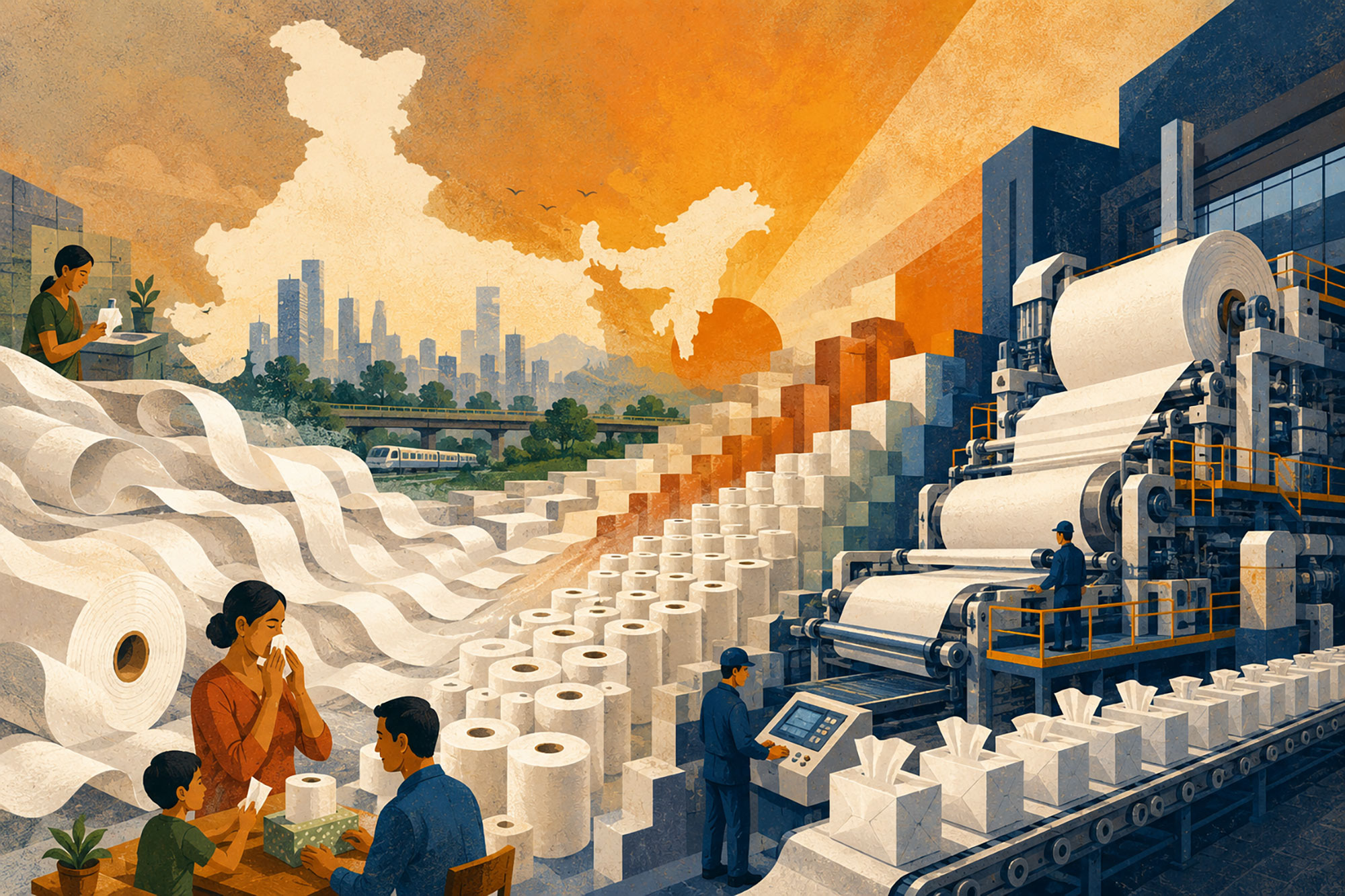
Strong cultural and economic changes are underpinning a volume-driven growth cycle in the world’s largest potential market. Here Sumit Khanna, Director of the New-Delhi based Beeta Machines looks to the short- and long-term prospects. A TWM report.

The Indian tissue market has transformed from a relatively low-priority niche into one of the fastest-growing segments within the paper and hygiene industry.
In April 2023, the country surpassed China as the world’s most populous, according to estimates from the United Nations. At that time, India’s population reached approximately 1.425bn people, and now in September 2026 it has risen to 1.48bn compared to China’s 1.41bn.
Over the last three years, the tissue market has moved beyond the post-pandemic recovery phase and entered a more structural, volume-driven growth cycle. This growth is being driven by rising health and hygiene awareness, the rapid expansion of the commercial sector, and significant government investment in infrastructure across the country. At the same time, we have seen a substantial increase in tissue-making capacity and overall volumes over the past few years, which is helping the industry respond to this growing demand.
The consumption mix in the AfH segment has evolved rapidly over the last couple of years.
The key growth drivers have been QSRs (quick-service restaurants), technology and corporate offices, and, of course, the wider HoReCa sector. Increasing investment in India, including foreign direct investment (FDI), is also contributing significantly to the formalisation and expansion of these markets.
Online food delivery and the rapid growth of cloud kitchens – delivery-only commercial cooking spaces that operate without a physical storefront, dining room, or dine-in seating – have been particularly important growth engines, driving increased consumption of napkins and other tissue products. At the same time, the return-to-office trend and formalised office attendance policies implemented by technology companies and multinational corporations have reshaped corporate AfH consumption. FDI has also played an important role in institutionalising and expanding the backend infrastructure of the food-service industry. Given these structural changes, I believe the AfH segment has considerable room for further growth over the coming years.
In the private-label AfH category, these products currently have relatively limited significance. The segment is largely dominated by plain, non-branded products, particularly in institutional and commercial applications. Private label is likely to be more significant in the retail segment, where consumers are more directly exposed to brands and where retailers have greater opportunities to develop their own product ranges. As modern retail and organised retail continue to expand in India, I expect private-label tissue products to become increasingly relevant.
Over the next five years, I see three major opportunities for the Indian tissue industry; bamboo-based products, the continued expansion of the AfH segment, and international export markets.
These areas have the potential to accelerate India’s development as a major global tissue manufacturing and supply hub. In particular, India’s growing manufacturing capabilities, expanding domestic consumption and increasing focus on sustainable fibre alternatives could create significant opportunities for both domestic and international markets.
Additionally, one of the biggest challenges facing the Indian tissue industry is the continued dominance of the unorganised sector, the sectors that are part of the economy which aren’t regulated, registered or strictly monitored. This creates challenges in terms of standardisation, quality consistency, and the overall development of a more structured market.
Another challenge is the influx of low-cost imported tissue paper and finished tissue products. While imports can provide consumers with more choice, very low-priced imports can put pressure on domestic manufacturers and make it more difficult for organised Indian producers to compete purely on price.
The industry therefore needs to focus on quality, efficiency, innovation and scale in order to build a more competitive and sustainable tissue market.