








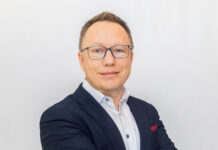





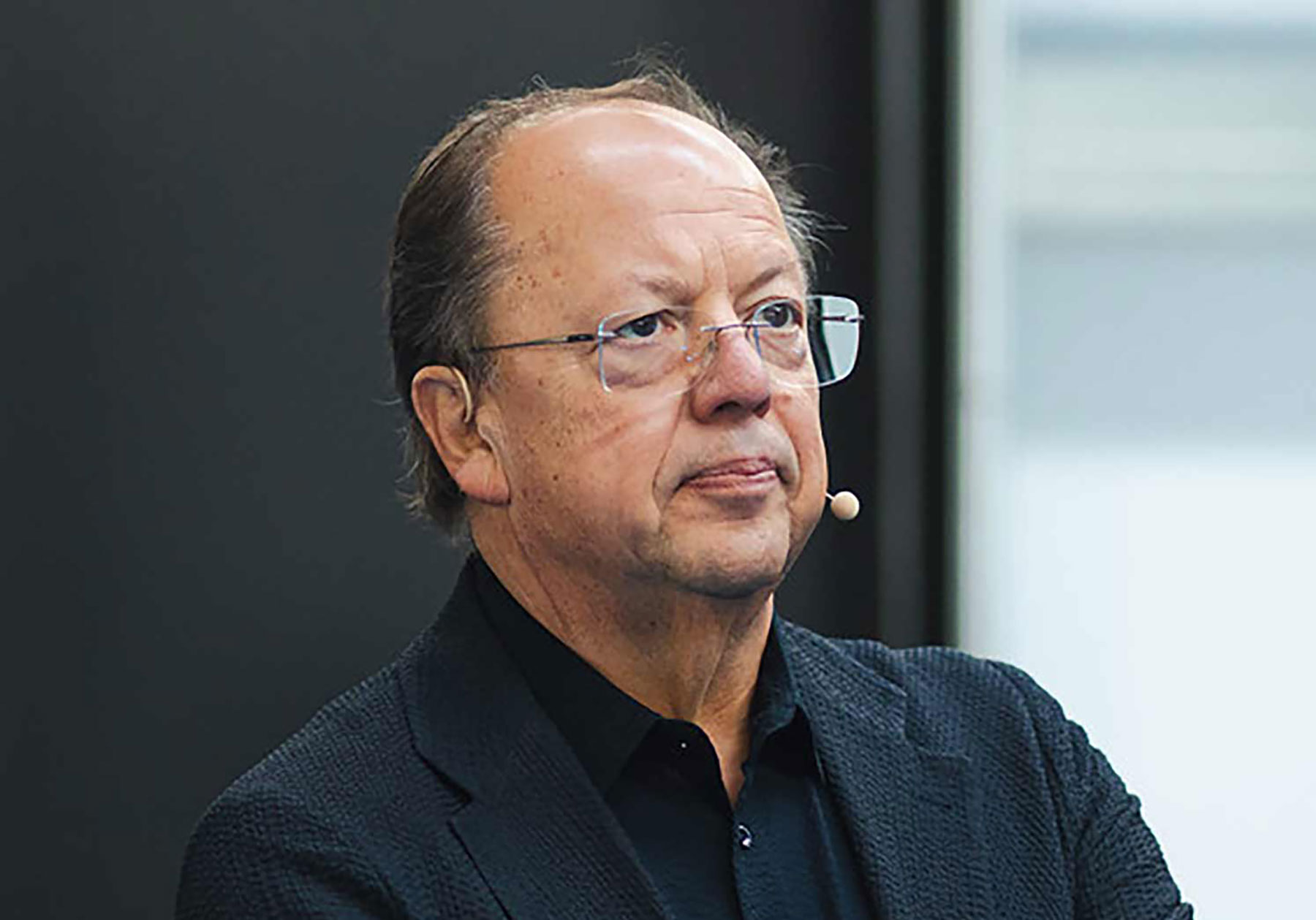
With the global market going through dramatic changes in demographics, ownership, logistics and AI, Luigi Lazzareschi, Group Chief Executive of Sofidel – Europe’s second and America’s fourth largest tissue producer – outlines his concerns to Tissue World Magazine Senior Editor Helen Morris.
Luigi Lazzareschi is in reflective mood as we sit Real Collegio di Lucca, Tuscany, at the heart of Italy’s tissue pre-eminence.
The Royal College’s history spans more than two hundred years and is housed in what was once the ancient convent of the Basilica of San Frediano, whose origins date back to the 6th century. Today it combines architectural elegance with educational purpose. In a wide-ranging interview he reflects on that history, and on what the future holds for tissue in Italy and across the global market. Over the last few years turbulent geopolitical events, overcapacity, imports, transitions to artificial intelligence, demographical changes, merger and acquisition – as well as company departures – have positioned the European tissue market in a state of flux.
It is perhaps fitting that this year the Sofidel Group is celebrating its 60th anniversary. The Porcari-based company, located in the heart of the ‘tissue valley’ – also known as the Italian Paper District, the global epicentre for the design and manufacturing of tissue paper production and converting machinery – was founded by entrepreneurs Emi Stefani and Giuseppe Lazzareschi in 1966 and is still entirely owned by the founding families. As part of its celebrations during 2026 it is hosting a programme of internal and external initiatives, including sponsorship of Giro d’Italia, the road cycling race first organised in Italy in 1909.
“The start of the race’s 11th stage started outside our factory for the Porcari-Chiavari leg, named the Paper District,” Lazzareschi says. “It was a valuable opportunity to give visibility to an industrial district of outstanding excellence: a tribute to a territory where we are deeply rooted and to which we owe a great deal.”
Over the last few years, he explains that the demographical changes seen across the European market are one of the long-term factors having a negative impact: “Italy, for example, has had a decreasing birth rate for many years. The year I was born, I was one of 950,000 babies born that year. Last year in Italy only 355,000 babies were born. That’s 600,000 less people being born every year in Italy, the equivalent to a city the size of Palermo disappearing every year. That means a big change in consumption for our industry year-after-year.”
‘I DON’T THINK TISSUE GROWTH IN TERMS OF PER CAPITA CONSUMPTION IN EUROPE IS GOING TO BE A POSITIVE TREND.’
People may say that per capita consumption has increased across some European countries, but he says that the facts show that regardless, the decreasing birth rates are “substantially changing” Europe’s demographics. This is also having an impact in terms of the number of people living in Italy: “The average age of people here in Italy is getting
older and older, and older people have a lower consumption than younger people. My grandfather, when given a kitchen paper napkin he would split it in two and use only half of it. My mother is probably not quite like my grandfather, but my mother is still not using as much paper kitchen towel as I am using. And then so on across the generations. If you look at these facts, a decreasing population and one that is getting older … I don’t think tissue growth in terms of per capita consumption in Europe is going to be a positive trend.”
What is happening in Italy is happening in many European countries, there is no country where the population is increasing significantly: “This is a long- term negative factor that is negatively impacting tissue, and also many other industries.”
Overcapacity is the second issue that year-after-year is changing the market: “There is overcapacity in Europe. Probably several companies – including ourselves – have not perceived the fact that the market hasn’t continued to grow as much as it was growing 20-15 years ago. We have continued to grow in the same way as we have done previously by adding new capacity.”
Companies could instead have grown a little differently, maybe by acquiring in a joint venture or internationalising more: “Most European producers are playing in just one country or two, and possibly they haven’t looked at other markets where there is
better growth. This is probably not the best strategy.”
These long-term factors are difficult to change, but Lazzareschi adds there are also short-term factors that are changing the market. Imports on one side, higher inflation, higher costs linked to energy, to petroleum, oil, chemicals, and also the polythene used to wrap products. The short-term factors are cyclical: “There was a big spike especially in 2022 with the start of the war between Ukraine and Russia, when energy prices went up by six, seven, eight … even by 10 times as much as previous years. Now again with the Iran war, the industry has seen a big spike on the price of gas and electricity.”
As an industry, paper and tissue production needs a lot of electrical and thermal energy, and he believes it is unfortunate that Europe doesn’t have a policy to be more independent here: “Some countries they are very dependent on imported gas and oil. Italy especially has a very strong energy supply, but the market is volatile and cyclical. We need to be much more independent and more reliant on our own production coming from renewable resources. Here in Italy we have plenty of sun, geothermal and hydroelectric energy, wind, mountains, and sea. We are one of the European countries where renewable energy is much more available than many others. But for several reasons we are behind.”
This high energy cost is creating many problems: “From one side it’s pushing inflation and high costs on energy, putting us in a weaker position compared to other countries, especially those in Asia.” Last year Europe imported a lot of tonnage – the volume of international jumbo rolls that arrived from outside of Europe was 613,000 tonnes: “That’s a big number, the equivalent of 10 large tissue machines, which is putting even more pressure on the existing overcapacity.”
‘THE ITALIAN GOVERNMENT AND THE EUROPEAN UNION NEED TO GIVE THE NECESSARY ATTENTION TO PROTECT EUROPEAN INDUSTRY FROM UNFAIR COMPETITION.’
He is not against the imports per se, but adds that he is against it if they are coming with unfair competition: “On one side, many of the companies importing are subject to less strict environmental regulations. On the other hand is the issue that for the products that are imported, the companies don’t pay. For example, the emission taxes (ETS) that all the European companies are paying. In some way it’s like subsidising those imports, and we believe it is not competing on a level playing field.” He emphasises that the Italian government and the European Union need to give the necessary attention to promote a more proactive, holistic approach to protecting the value created in Europe. As a company and together with others, the business is trying to promote legislation that protects ‘Made in Europe’, which indicates that a product is adhering to the EU’s strict quality, safety, and environmental standards.
“We are personally in favour of these regulations and legislations, and if they had already been properly in place we probably wouldn’t be seeing all these imports. We are in favour of forest certification because these days, the many products that are coming from some oversees areas very often are not FSC-certified, for example. We cannot easily put tariffs on whatever is imported, so the European Union has done whatever is possible to prevent unfair competition without putting in tariffs. This will likely create additional costs and paperwork, but in the end they will protect us against unfair competition. We have to say no, we don’t want this. If we must work more, we will work more. We will all be in the same boat and we need to prevent it.”
Looking at consumers and retailers, is there enough awareness of these issues? “The attention of the final consumer isn’t quite there as they don’t really know what is good or not, they don’t know if one product is respecting all the rules and European legislation. Retailers, especially those in the supermarket chain, know more and are paying higher attention to these issues, both in terms of sustainability efforts and protecting European players.”
In the AfH markets, the situation is the most complicated: “The attention to forest certification appears to still be limited. This is my own speculation, but I believe most of the imports coming from Asia are mainly directed to the AfH products.”
As to how the European tissue mills are responding, he hopes there will be some
concentration amongst the players: “There are many producers, especially when compared to the US. I hope that those that want to grow will start to change their strategy and grow more by mergers and acquisitions, instead of adding new capacity and new plants here and there.”
European tissue has seen some big changes in this evolution in the last 20 years, with Procter & Gamble (P&G) leaving Europe – “probably because it was no longer an attractive market for them” – and also the same for Georgia Pacific (GP). Kimberly-Clark (K-C) has also recently announced a joint venture with Brazil’s Suzano. And in May, Swedish headquartered tissue giant Essity initiated a strategic review of its consumer tissue business area’s global operations.
What will happen? “It’s speculation because we don’t know what will happen or what will be the solution for Essity, whether it will it be a spin off, a joint venture with someone else … it might be that it goes to someone outside and then they will still be the largest European producer.”
Could the market benefit from more integrated joint ventures as with Suzano and K-C? “If it happens further, the tissue mill needs to be a leader and also the pulp producer has to be a competitive company. The number of companies that could do that are slim.”
The changing European tissue landscape is also adjusting to the incorporation of artificial intelligence, and how – and what – role it will play in a tissue mill’s future. “This links backs to the first part of conversation – demographics. There is a question – who will run our machine in 20 years from now?”
Sofidel has created a specific department for artificial intelligence, and Lazzareschi says it is at the first stages of imaging where and how to use artificial intelligence. “None of us are especially happy about this new technology that is coming very quickly. But at the same time, we know it is impossible to de-invent it. So we have to lean with it.”
‘IT IS QUITE LIKELY THAT WE WILL NOT HAVE ENOUGH PEOPLE TO RUN OUR MACHINES IN 20 YEARS FROM NOW.’
He sees artificial intelligence playing out in two areas: firstly in the software area, improving office work, making a forecast on future sales. Secondly in hardware and what is happening in the factory. “What will happen to labour? Will artificial intelligence be a labour substitution or not? Will there be people working together with humanoids? That is going to be a much more complicated and ethical problem. I believe, at least in the foreseeable future, a machine will not be allowed to operate in paper production or paper converting. There won’t be non-human operators replacing physical labour.”
It’s demographics, he says, that holds the main question: “It is quite likely that we will not have enough people to run our machines in 20 years from now. We are going to have difficulties finding the talent needed for people to work at a paper mill, to work on a continuous operation, 24 hours a day, seven days a week, all days included. On one
side we won’t have enough talented people to run the machines, and on the other side we won’t have the labour, or the knowledgeable labourer to run sophisticated machines that are equipped with high technology and artificial intelligence.”
He says the future of the tissue mill will “either be very sophisticated machines equipped with artificial intelligence run by well-educated scholar engineers, or with less educated people running a simple machine, running at lower speeds, less expensive.” That is what the industry is already seeing in some parts of the world today, a very simple small machine, with a few people per machine running the same product every day. “Today here in Europe we are accustomed to very large machines, very flexible, where you can create many different products. Which one will be the future? Considering also these changes, maybe it will be a mixture of the two. It’s a big question.”
Innovation in the coming years will need to mean that the producer must create the value needed to work on innovation. The European producer can do two things to grow: increase quantity elsewhere, or increase quality where they are: “Innovation is a key level to enhance market value, while also contributing to safeguarding the region from low-value commodity imports.”
Lazzareschi returns to the celebrations of the tissue valley and Sofidel’s 60th anniversary as an example: “These celebrations are not just dedicated to Sofidel, but to the whole tissue valley. The risks we are seeing here in the European tissue market are not only for the tissue producers; they’re also for the tissue machinery manufacturers. In the end, this valley is strong because all these players are united across the valley.”