Marcal, the oldest major recovered-paper maker in the USA, recently emerged from bankruptcy and, with a new management team and $30 million of borrowed money, launched the first nationwide campaign to promote its Small Steps™ line of 100% recycled tissue products.
Small Steps™ products are hypoallergenic, practically lint-free, and made without chlorine bleaching, added dyes or fragrances. On 14 April, in the middle of New York's Times Square, the company set up an 'Urban Forrest' (that second 'r' is one of Marcal's tissue brands).
The exhibition consisted of a two-ton, 4.6 m high roll of toilet paper representing the average American household's annual consumption, and a 3. 5-ton pile of blue plastic bins filled with waste paper (newspapers, junk mail, catalogues, magazines and office paper) required to produce such a roll.
To intensify the effect, Marcal made onlookers walk among 34 full-sized trees, the magnitude of living nature that an average family can save by picking out recycled paper products over paper products made from virgin woods. This event attracted a steady flow of passers-by with the free giveaway of Small Steps™ toilet rolls. The most active participants were New York taxi drivers helping themselves in crisis times by making a few trips to giveaway points.
The arrival of 14 April, Earth Day, provided perfect timing for Marcal's environmental statement. It claims that, if every household in the US bought just one four pack of 260-sheet recycled bath tissue instead of the typical tissue made from virgin fibre, it would eliminate 27.5 tonnes of chlorine pollution, preserve 1.35 billion litres of fresh water and save nearly 1 million trees.
In the US, which is the largest market worldwide for toilet paper, tissue from 100% recycled fibre makes up less than 2% of sales. This can be attributed to the country's soft-tissue habit (the socalled Charmin effect).
That toilet paper fluffiness comes at a price, according to environmentalists from Greenpeace. Millions of trees are harvested each year to supply demand for tissue, including, the environmentalists, old-growth trees from Canada.

Most tissue manufacturers use a combination of trees to make their products. According to RISI, the pulp from one commonly used eucalyptus tree produces as many as 1000 rolls of toilet tissue. Therefore, 10 American families of four (at average expenditure of 23.6 rolls/yr per person) use a tree for basic needs.
Other countries are far less fussy about toilet tissue. In many countries, even in parts of Europe, a rough sheet of paper is quite acceptable. Other countries are also more willing to use toilet rolls from recycled paper. In Europe and Latin America, products made of secondary fibre make up an average of about 20 % of the retail market.
The US obsession with soft paper makes Marcal Paper's 'green' drive quite challenging in competition with the majors. Popular brands such as Quilted Northern Ultra (G-P), Cottonelle Ultra (K-C), and Charmin Ultra (P&G) boosted sales by 40% in 2008 in some markets, according to Information Resources Inc, a marketing research firm.
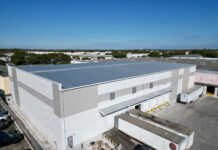
Marcal, which filed for Chapter 11 bankruptcy in November 2006, is a major manufacturer (900 employees) located in the town of Elmwood Park. The main mill location is controversial due to several unresolved Passaic River pollution claims. Also Elmwood Park belongs to Bergen County in the state of New Jersey, the state with the highest property taxes in the country. The company's new investors, including Texasbased NexBank SSB, ponder public awareness of the environmental issues. "Since 1950 we've been manufacturing products from recycled paper.
Marcal has helped to save trees and reduce landfill waste. This campaign to save one million trees is a natural extension of our green heritage," said Tim Spring, CEO of Marcal during the event.
TW