















Euromonitor International Consultant Per Brandberg assess the challenges facing the United Kingdom’s mature landscape.
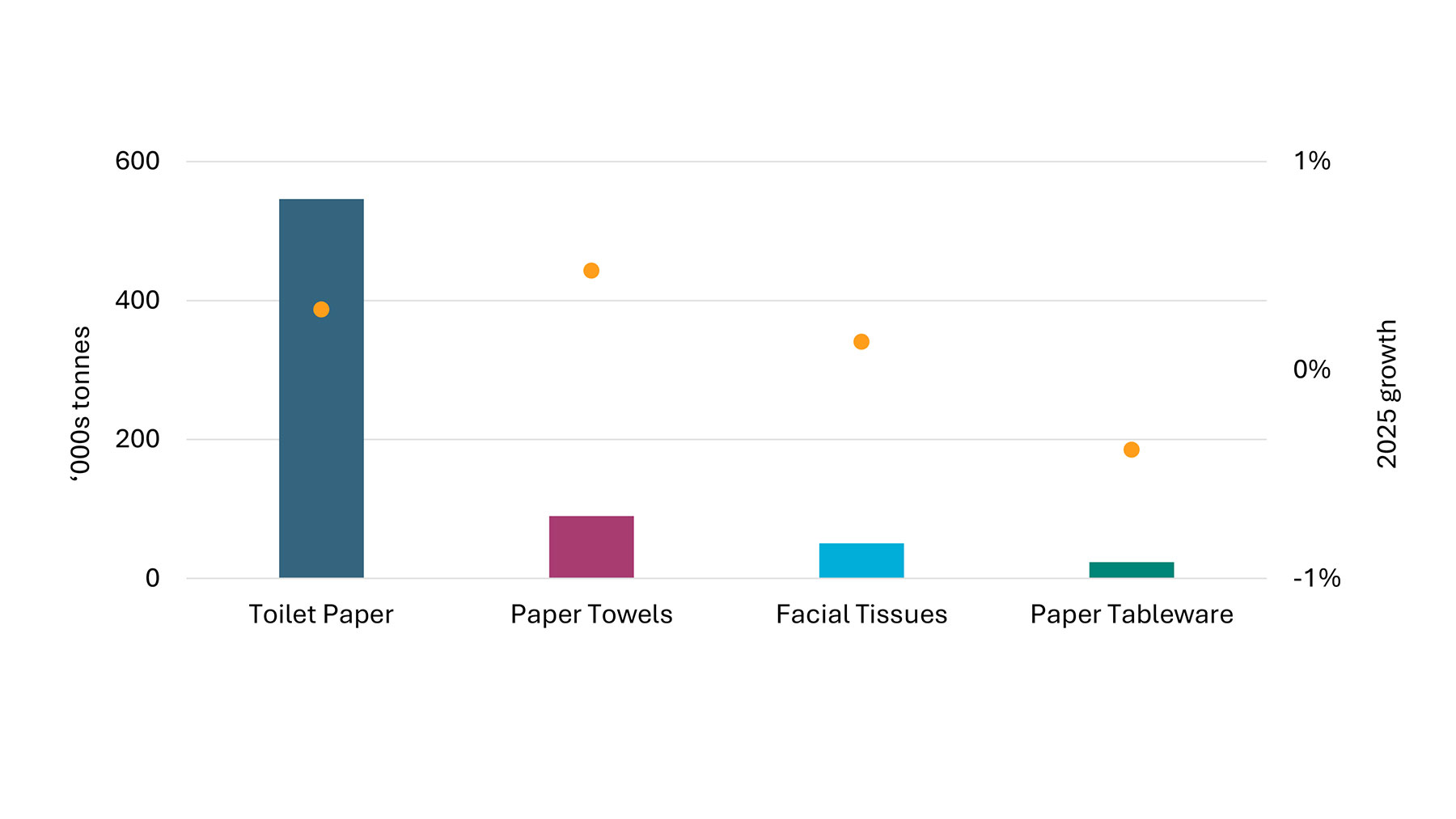
The volume sales of retail tissue rose modestly to reach 710,000 tonnes in 2025 in the United Kingdom, reflecting a mature landscape that is growing in tandem with the population, which reached 69.1m. Toilet paper remained the largest category within retail tissue, with the product category experiencing volume growth as demand is underpinned by its essential status in households and the entrenched purchasing habits of local consumers. Paper towels recorded modest but the fastest retail volume growth as a category, and although pocket handkerchiefs posted marginally higher growth than paper towels, the flat performance of boxed facial tissues led to a more modest rise for facial tissues as a whole.
In value terms, the retail tissue category experienced a small decline in retail current value sales in 2025, following a similar pattern to 2024, because of falling unit prices and consumers moving towards bulk purchasing and value-driven decision-making. The fall in unit prices is partly linked to lower raw material and production costs compared to peak levels seen in 2022 and 2023, which enabled many brands to reduce their shelf prices. Despite easing inflation, affordability remained a critical driver for shoppers, with many consumers actively seeking larger pack sizes, bulk discounts or trading down to private label products to optimise value for money which also contributed to the lower unit price development in 2025. This has influenced not only the competitive landscape but also the types of products retailers and brands bring to the shelf, with larger formats and value packs becoming more prominent.
Volume growth across retail tissue categories, 2025
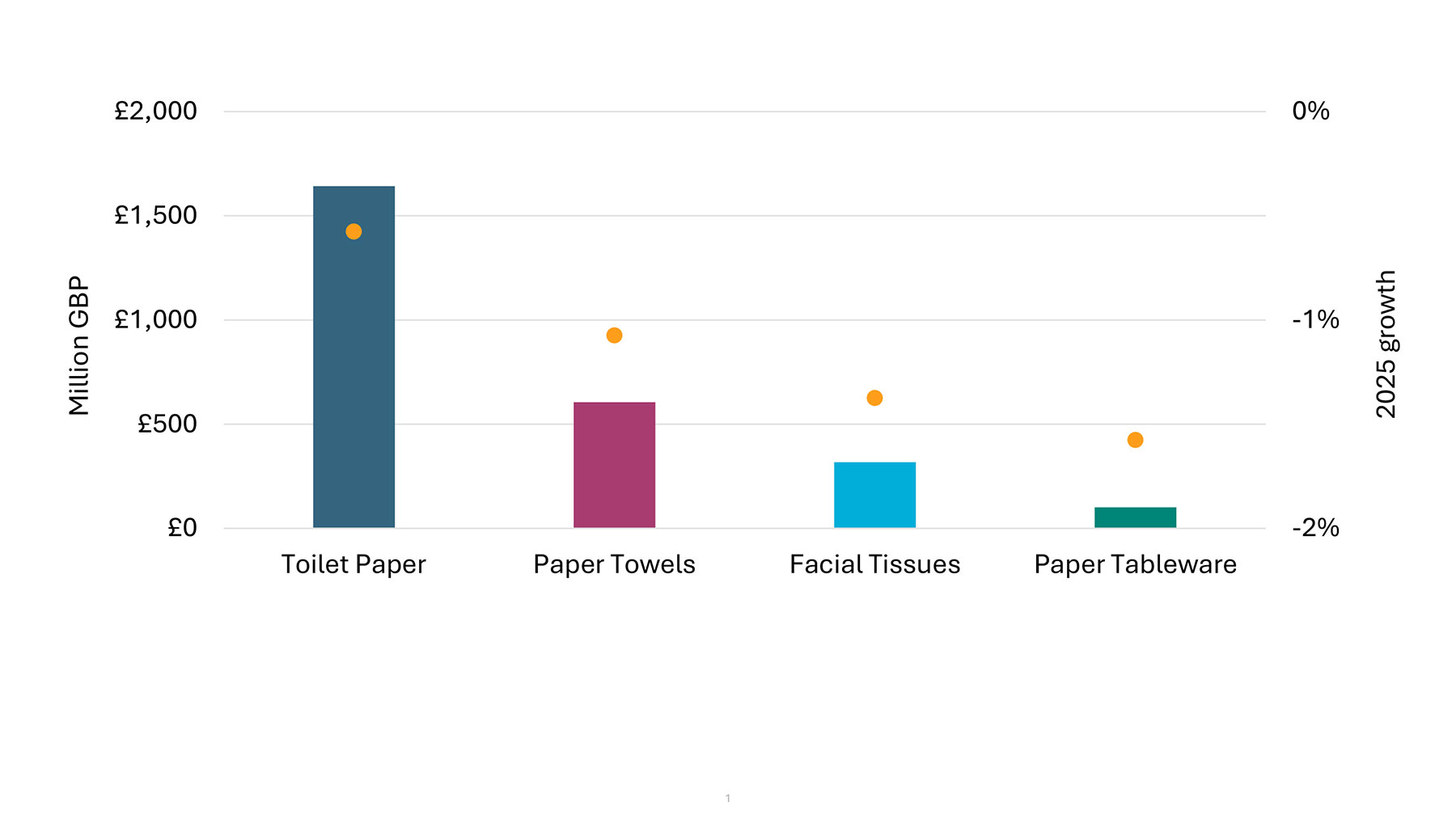 Value growth across retail tissue categories, 2025 consumers seek affordable, sustainable products
Even though many consumers are prioritising larger pack sizes and value-driven decision-making, sustainability still remains a powerful trend shaping retail tissue, with brands and retailers seeking differentiation through the adoption of recycled materials, sustainable packaging and alternative fibres, such as bamboo. The ability to deliver environmental benefits without compromising value is becoming a key point of competition, as brands seek to appeal to consumers who are increasingly conscious of the environmental impact of their purchases. These dual priorities are shaping the competitive landscape, driving both established players and emerging brands to innovate across product formats, material sourcing and packaging design.
The importance of this trend is highlighted by Who Gives a Crap’s first listing in Tesco in 2025, a move that brought bamboo and recycled paper-based toilet paper, paper towels and tissues to a wider mainstream audience. To support the launch, the tissue manufacturer introduced a mega length toilet paper roll, 50% longer than standard, combining eco-friendly positioning with added value; a combination that resonates strongly with the contemporary consumer mind set.
The expansion of sustainability-focused products into major retail channels reflects the growing demand for ethical and environmentally responsible options, even in a price-sensitive climate. While premiumisation is present, the success of brands like Who Gives a Crap is tied to their ability to balance “green” credentials with affordability and convenience, appealing to a broad demographic. This wave of eco-focused innovation is paralleled by the wider movement among established brands and private label retailers to enhance their sustainable credentials, using recycled content or alternative fibres as a means of gaining competitive advantage in a highly contested space.
Sustainability, affordability and brand loyalty to shape the future of retail tissue
Retail tissue in the United Kingdom is expected to see slow retail volume growth through the forecast period, with retail current value sales also set to rise slowly to moderately as the forecast period progresses. The category’s maturity means that further expansion in volume sales is primarily driven by incremental increases in the population. However, the established nature of retail tissue makes it challenging for brands to achieve significant gains, as most consumers already regularly purchase these products and are generally loyal to their preferred brands. As a result, brands are expected to intensify efforts to differentiate their offerings, aiming to secure market share rather than focusing on volume expansion. Sustainability, affordability, and brand loyalty are identified as the main trends shaping retail tissue in the coming years.
The continued focus on sustainability will have a tangible business impact, as brands invest in alternative materials and eco-friendly packaging to differentiate themselves and respond to evolving consumer values. Innovations centred on recycled materials or the use of fibres like bamboo are expected to become more prominent, particularly as consumers increasingly prioritise products with credible environmental credentials. Brands that successfully combine sustainability with affordability and practical benefits, such as larger or more convenient pack formats, are likely to be rewarded with stronger consumer loyalty and incremental value gains.
Affordability will remain a decisive factor in purchasing decisions, as evidenced by the popularity of private label and the tendency for shoppers to remain brand loyal unless a change in product formula or format prompts a switch. The balance between premiumisation and value for money will continue to shape the competitive landscape, with brands needing to justify any price premium with tangible benefits, such as improved quality, sustainability or added features.
Brand loyalty in retail tissue is high, with consumers typically switching only in response to formula or format changes that do not meet their expectations. These factors collectively reinforce the need for brands to balance innovation and value while responding to incremental shifts in consumer preferences.
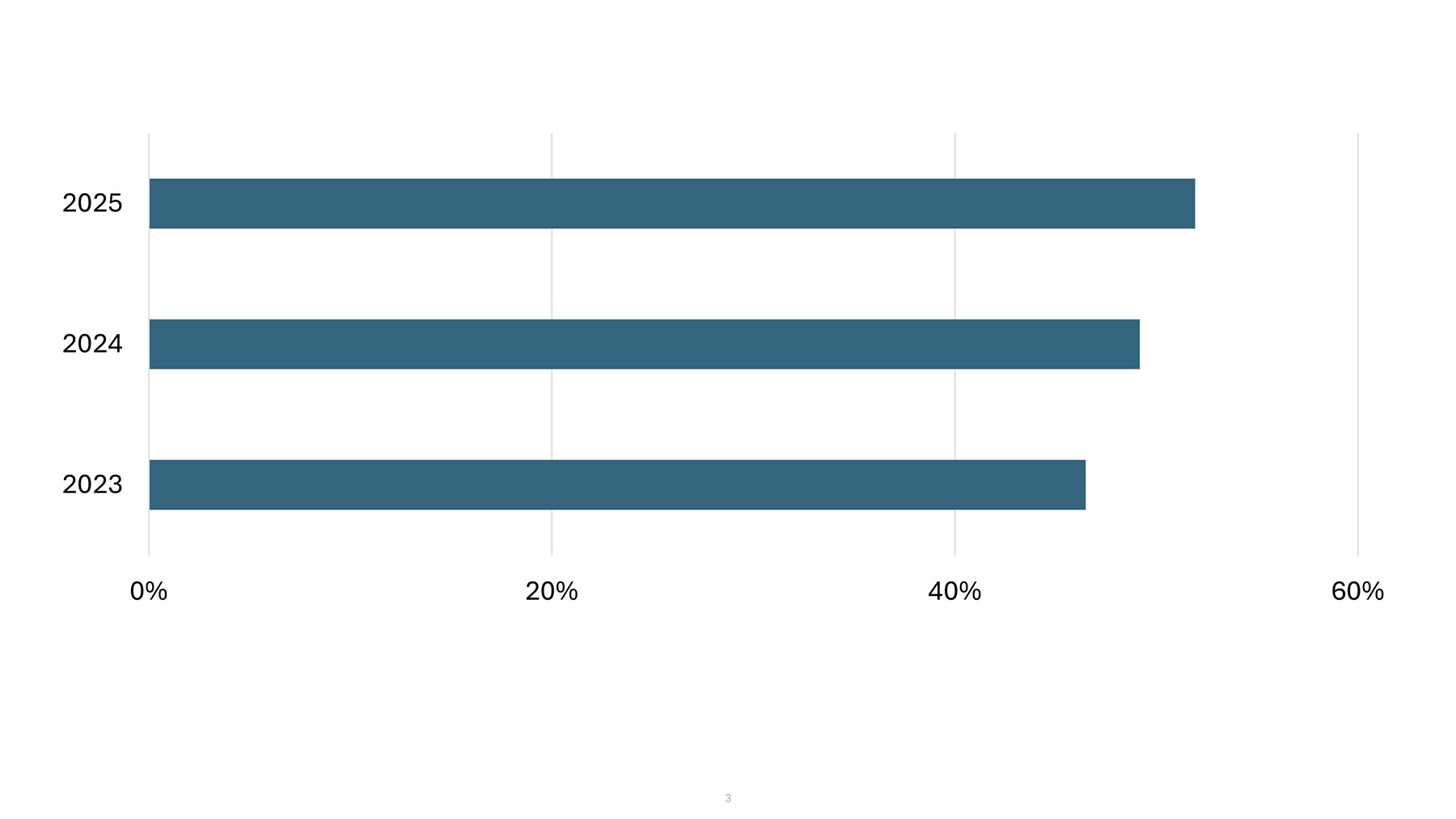
Share of retail tissue products online with sustainable attributes in the UK, 2025