


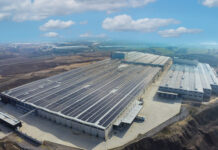















After a long decline, new large machine activity is adding capacity as the current closure of the Strait of Hormuz creates a global energy supply shock. Report by ResourceWise Senior Consultant Bruce Janda.

Tissue production in the United Kingdom declined gradually for more than two decades as older machines were retired, fewer new machines were commissioned, and net tissue imports more than doubled. That pattern began to shift in 2022 and again in 2025 as several new machines entered service. In 2026, five additional machines are scheduled to start up, with more expected in 2027 and 2028. These additions are concentrated in consumer tissue, and much of this activity is being driven by new producers entering the UK market. Together, these developments mark a meaningful turnaround and warrant a closer look at the sector’s current position.
The current closure of the Strait of Hormuz in the Persian Gulf due to the USA-Iran War has created a global energy supply and price shock. The data presented in this article represents prewar status. The situation is fluid but the effects on tissue production and costs in the United Kingdom can be expected to be substantial.
The current UK tissue mills are plotted on the map in Figure 1, with non-integrated mills shown in green and recycled fibre-integrated mills shown in blue. There are currently no virgin fibre-integrated mills in the United Kingdom.


Figure 2 shows United Kingdom population growth and GDP per capita, adjusted for purchasing power parity (PPP), two key drivers of domestic tissue demand. Population growth has depended primarily on immigration and slowed after the Covid-19 pandemic, while GDP per capita has rebounded. Together, these trends suggest a demand environment that has improved, although not uniformly.
Figure 3 shows trends in unemployment and inflation, both of which tend to constrain tissue demand growth. Inflation spiked after the pandemic and at the start of the Russia-Ukraine war. Data capturing the effects of the current Gulf war and related energy shortages are not yet available, but these factors may significantly affect consumer purchasing behaviour and tissue production costs. Unemployment began rising after the 2022 inflation spike, and the 5.5% value shown for 2026 is an estimate prepared before the current Gulf war. As a result, the full economic effects of Middle East energy supply constraints may not yet be reflected in the data.
The tissue export trend from the United Kingdom fell sharply from 2007–2008 to a much lower level as domestic tissue production declined, as shown in Figure 4. Ireland has remained the largest export market for the United Kingdom. This contraction in exports helps frame the importance of the import trend shown next.
Tissue imports increased over the study period to offset lower domestic production, as shown in Figure 5. Tissue suppliers to the United Kingdom include neighbouring countries as well as export-focused producers such as Türkiye, Indonesia, and China. The Y-axis for tissue trade volume uses the same scale for both imports and exports to allow easy visual comparison. Tissue imports into the UK are now running at about 5.5 times UK tissue exports. This imbalance does not yet reflect the large amount of capacity expected to come online in 2026 and should be revisited in a year or two. To understand whether that gap may begin to narrow, it is useful to examine changes in the domestic machine fleet.
Changes in the size of the United Kingdom’s tissue fleet are shown by grade in Figure 6. The early part of this trend reflects a steady pace of one to two machine closures per year across both consumer and commercial tissue grades, with the only exception being a small specialty tissue machine added in 2014. A greater share of commercial tissue machines was removed than consumer-focused machines. New consumer tissue machines were added in 2022 and 2025, with the 2022 start-up representing an advanced-technology tissue machine. The year 2026 is shaping up to be a major building year, with a group of new consumer tissue machines scheduled to come online. As older, narrower, and slower machines are replaced with newer equipment, 2026 is expected to mark the point at which overall UK tissue capacity begins to grow again after several decades of gradual decline.
Almost 60% of the United Kingdom’s tissue production is at sites integrated with recovered fibre processing from recycled papers, as shown in Figure 7. The balance of production is based on virgin market pulp. There are no virgin fibre-integrated tissue sites in the UK. This fibre mix helps explain the product and furnish profile shown in the next figure.
Tissue production in the United Kingdom is primarily focused on consumer bath tissue, as shown in Figure 8. The furnish for this production is mostly eucalyptus, with bleached northern softwood accounting for more than 67% of output. The remainder of consumer bath tissue is produced with recycled fibre or BCTMP. Consumer towel production uses similar furnishes, although with a lower share of eucalyptus pulp. Commercial-grade products account for a smaller share of production than might be expected, which suggests that a meaningful portion of imported tissue may be away-from-home grades. Figure 9 then shows how much of this output is produced on advanced tissue process machines.
The United Kingdom’s advanced tissue process machine fleet includes one machine built 45 years ago, while the newest is only five years old. Advanced tissue process production represents about 15% of the total. Of that production, approximately 80% is consumer bath tissue and 20% is consumer toweling, as shown in Figure 9. The next set of figures places the UK in an international context.
A set of countries – Brazil, France, Germany, Italy, and Türkiye – was selected to compare tissue production with the United Kingdom and to highlight current trade partners and potential lower-cost producers. Figure 10 presents a bubble chart of tissue machine quality, where bubble size represents production capacity. The X-axis measures average technical age, while the Y-axis reflects average machine speed. Türkiye’s machines are the newest, with Brazil close behind. France and Germany match Türkiye’s high machine speeds despite having some of the oldest machines in the comparison set. The profile of UK machines is most like that of Italy.
Figure 11 illustrates average tissue production costs by country, with bar height indicating cash cost per ton and bar width representing production capacity. Brazil records the lowest cash costs, followed by Türkiye, Italy, and Germany. France has the highest costs despite its relatively low-cost nuclear-powered electricity grid. Energy expenses have a significant influence on these costs, and current geopolitical disruptions may affect countries differently depending on their energy exposure. Fibre and pulp expenses, represented by the red and green bar segments, also vary considerably across the comparison set. Labour costs are substantially higher in France and Germany, while Brazil, Türkiye, and Italy benefit from lower labour costs. Labour costs in the UK fall in the middle of this range. Figure 12 separates the energy component in more detail.
The average energy cost per ton of tissue production is shown in Figure 12 for the United Kingdom comparison set. Energy costs are broken out by steam, electric power, and direct fuel. These relative energy costs per tissue ton were measured before the Gulf war and may change considerably. Brazil has the lowest energy costs per ton, while France and the United Kingdom have the highest. This cost position is important context for the viability comparison in Figure 13.
Figure 13 illustrates the comparative average viability of tissue machines across several countries. The FisherSolve algorithm evaluates multiple factors, including estimated capital requirements, cash production costs, machine size, technical age, local economic risk by grade, internal company risk, manufacturing competitiveness, tons produced per unit trim, and export fees. By incorporating these criteria, the assessment extends beyond current cash costs to provide a broader view of likely competitiveness over the next five years.
The viability of the United Kingdom’s tissue fleet is rated as moderate, broadly in line with others in the comparison set. Lower average costs in Brazil, Türkiye, and Italy improve their relative position, as does the younger technical age of the tissue machines in Brazil and Türkiye. Figure 14 adds an emissions perspective to this competitiveness picture.
Figure 14 shows Scope 1 emissions, represented by the red bar segment for on-site fuel, and Scope 2 emissions, represented by the tan bar segments for grid electricity, per ton of finished tissue. Scope 2 emissions depend in part on the carbon intensity of the local or regional power grid. Brazil’s power grid is relatively low carbon, and its fuel-related emissions are also low. France is a leader in nuclear power, which results in lower carbon emissions than those of similar machines in other countries. The United Kingdom is in the middle of the comparison set.
Summary:
UK tissue production is entering a recovery phase after more than two decades of gradual decline, driven by new consumer-focused machine start-ups in 2022, 2025, and a larger wave expected in 2026.
Domestic production had fallen as older machines were retired and imports expanded, leaving UK tissue imports at roughly 5.5 times export volumes.
The expected 2026 capacity additions could begin to narrow the import gap, although the market remains significantly exposed to foreign supply.
UK tissue production is concentrated in consumer grades, especially bath tissue, with a relatively small share of commercial-grade output.
Nearly 60% of UK tissue production is integrated with recovered fibre processing, while the remaining production relies on virgin market pulp; there are no virgin fibre-integrated tissue sites in the UK.
Advanced tissue process machines account for only about 15% of UK production, indicating that much of the fleet remains older or less technologically advanced.
Compared with Brazil, France, Germany, Italy, and Türkiye, the UK machine profile is most like Italy, while Türkiye and Brazil have newer fleets and, in some cases, stronger cost positions.
Brazil has the lowest average tissue production and energy costs among the countries compared, while the United Kingdom sits in the middle to higher end of the cost range, particularly on energy.
UK tissue fleet viability is rated as moderate relative to the international comparison set, reflecting a mix of cost pressure, machine age, and competitive position.
On carbon emissions per ton, the United Kingdom ranks around the middle of the comparison set, behind lower-carbon systems such as Brazil and France.
The report concludes that UK tissue production growth is resuming, but future competitiveness will still depend heavily on energy costs, import pressure, consolidation, and broader market conditions.
Because the report’s cost and market data were compiled before the current Gulf-related energy disruption, actual conditions may shift materially as new information becomes available.
A detailed understanding of tissue producers and their individual machines is essential for analysing the competitive landscape. This article presents an overview of the current tissue industry in the United Kingdom. The data suggests that UK tissue production is entering a recovery phase as new consumer-focused capacity comes online, but the market remains exposed to imports and to persistent cost pressure, particularly in energy. Fluctuations in fibre prices, exchange rates, energy prices, and environmental regulations will continue to create both opportunities and challenges for industry participants. Changes in ownership and consolidation are also likely to continue among UK tissue mills, while investments in tissue-making capacity in neighbouring countries may affect future import and export patterns.