
















Türkiye’s tissue sector is swamped with capacity and squeezed by Far East competition. Lila Kağıt has started up production in Erzurum and is lining up a 70,000tpy Valmet machine for 2027. Alp Öğücü, General Manager, Lila Kağıt, speaks to TWM Senior Editor Helen Morris.
“When we spoke to Tissue World Magazine two years ago, we were outlining the plans for our next phase of growth,” Alp Öğücü, General Manager of Lila Kağıt explains from his office in Erzurum, Türkiye. “Today, we have already put a significant part of those plans into action. Our focus now is to build Lila Kağıt’s next 20 years on this foundation.”
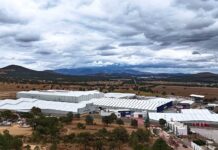
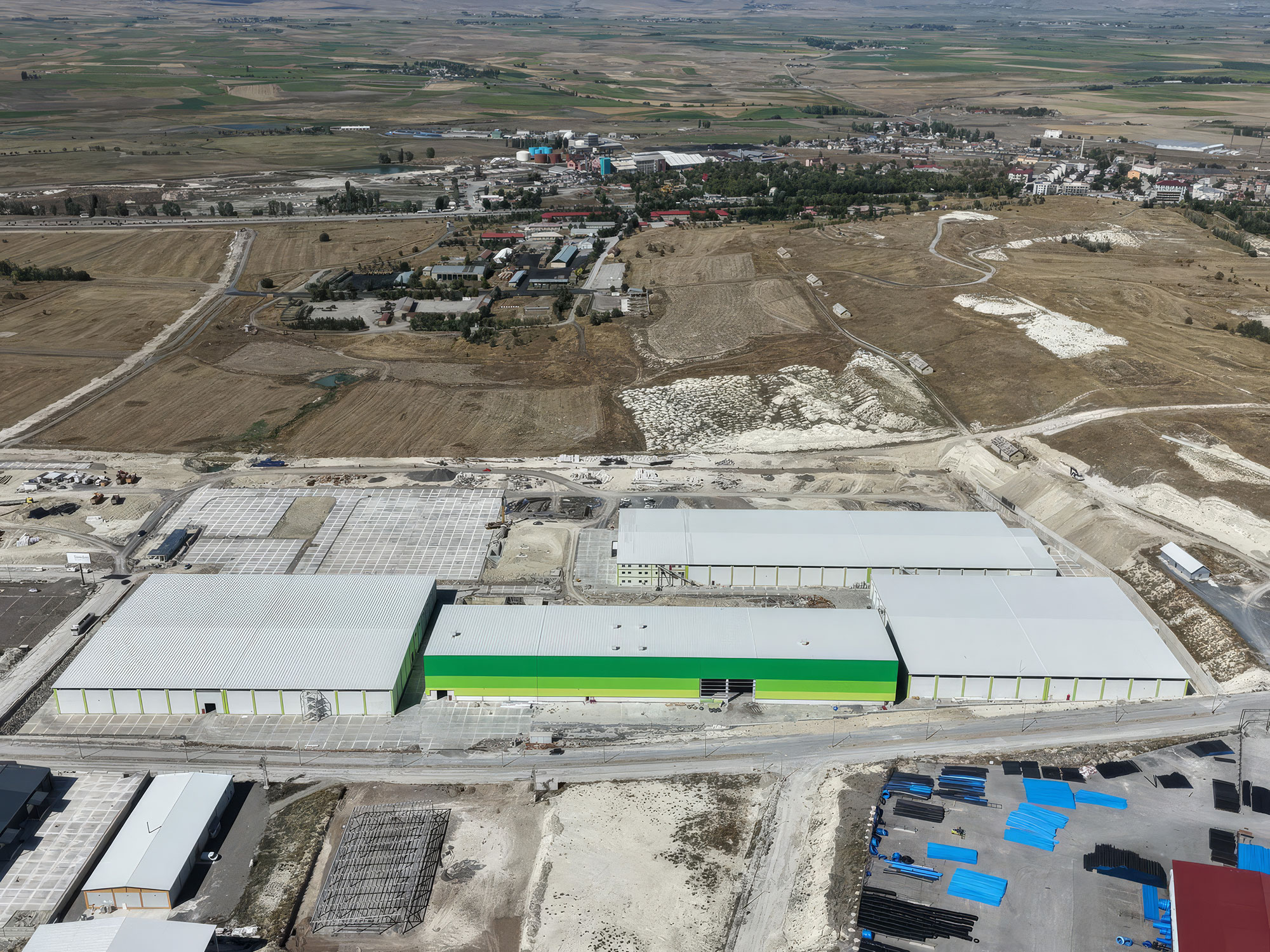
In 2024, Lila Kağıt’s planned plant in Erzurum, eastern Türkiye, was still under discussion. Today the first phase is running: “The most important development since we last spoke has been the completion of the first phase of our Erzurum investment,” says Öğücü. “As of June 2026, we started production and sales operations at our facility.”
He explains that the site matters for reasons beyond tonnage: “This investment is highly strategic not only in terms of additional capacity – we have doubled the scale of the investment – but also because it extends our production footprint into eastern Türkiye and brings us closer to markets in the Caucasus, the Middle East, and, in the longer term, Central Asia.”
TM5: doubling the plan
Phase two centres on TM5, Lila Kağıt’s fifth Valmet-supplied tissue machine. The scope covers a complete Valmet Advantage DCT 200 tissue production line with stock preparation equipment. The machine will have a width of 5.6m and a design speed of 2,200mpm, adding 70,000tpy of tissue for domestic and export markets.
That is roughly double what was initially announced: “When we first discussed the project two years ago, we had announced approximately 30,000-35,000 tonnes of additional capacity,” Öğücü says. “After reassessing regional and international market needs, we increased the scale of the investment to 70,000 tonnes of gross annual capacity.”
Start-up is targeted for 2027, lifting gross annual tissue paper capacity from 271,000 tonnes to approximately 341,000 tonnes.
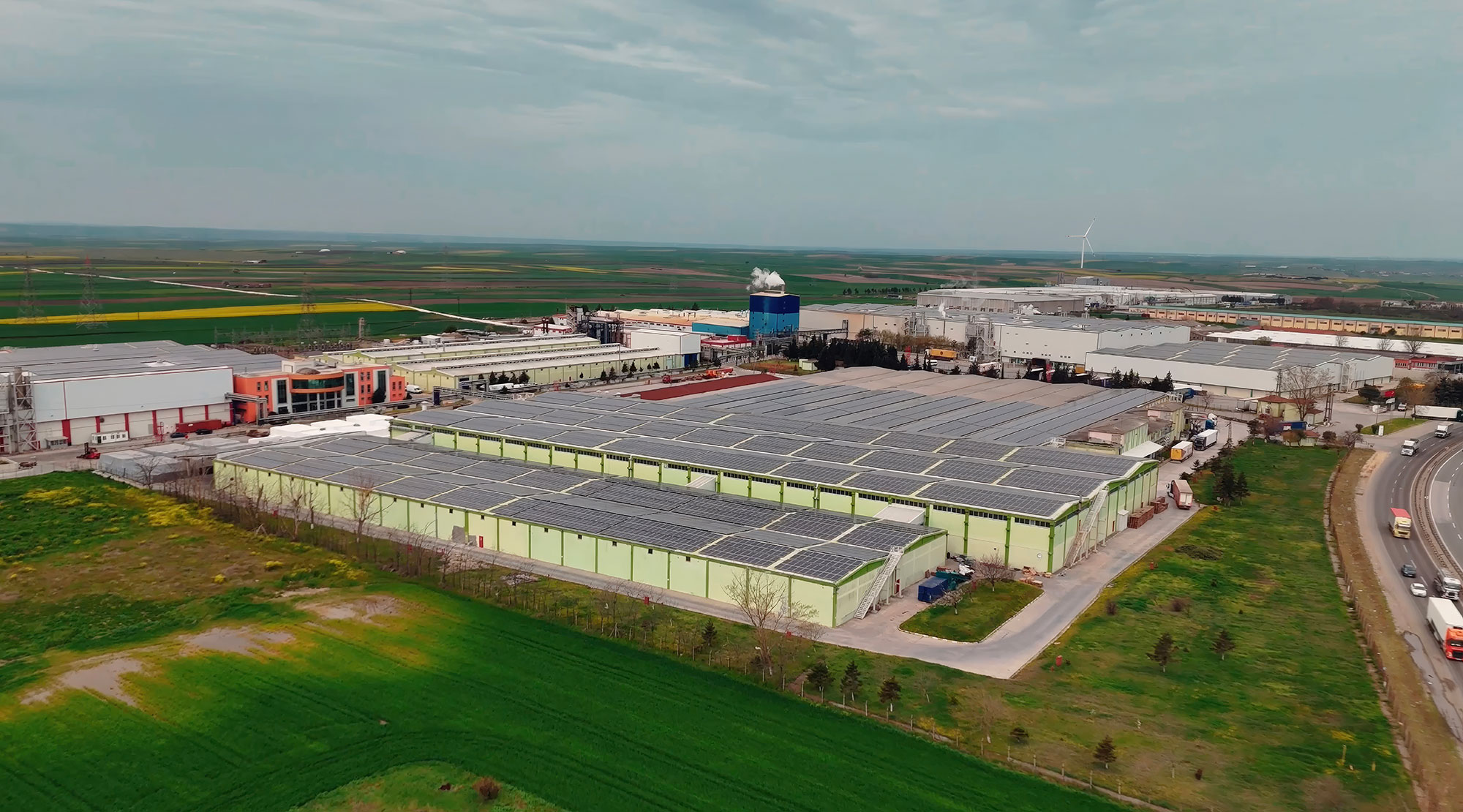
At the same time, Lila continues to invest in automation, modernisation, capacity optimisation and smart warehousing at its Ergene facility in Tekirdağ Province. “Our approach to growth is not simply about adding new capacity; it is also about making our existing production infrastructure more efficient, flexible and technology-driven.”
Capacity discipline in a crowded market
Established in 2006 with production ramping up in 2007, the company will keep growing in Türkiye, but not simply by adding tonnes: “The Turkish tissue industry has already reached a significant level of production capacity,” he says. “Going forward, it will be much more important to build the right capacity, in the right location, and close to the right market.” The company “does not want to create capacity simply for the sake of capacity.”
Erzurum is his example: “Our objective is not simply to increase Türkiye’s total capacity, but to move closer to markets in eastern Anatolia and neighbouring export geographies, create logistics efficiencies and establish a new regional production hub.” Value-added products are the other priority: “Innovation is not easy in our industry, but it is certainly an area where we need to differentiate ourselves.”
Consumers: value over premium
For suppliers and brand owners, the domestic consumer story is about price-performance. “In Türkiye, purchasing power and price sensitivity have been the most important factors shaping consumer behaviour in recent years,” says Öğücü. “Price matters more than ever. But consumers are not simply looking for the cheapest product; they are paying much closer attention to what they receive in return for what they spend.” Promotions and larger pack formats are becoming more prominent, while absorbency and softness still matter.
Premium and differentiated products retain a place, particularly in niche segments, but he says the market is driven by the balance between price and performance rather than premiumisation. The business is shaping development around that, with segmentation and innovation across its Sofia, Maylo, and UltraBerrak brands.
AfH: quality is king, but price decides
In AfH, purchasing decisions are “primarily driven by price”, and sensitivity is even sharper than at retail. With costs rising in Türkiye, businesses increasingly see this category as a place to save: “Demand for premium products is more limited. Certain hotels and restaurants see tissue quality as part of their overall service proposition, but this does not represent the broader market.”
The company’s response is to meet the need “at the right quality level and at the most efficient possible cost”. Domestically, it serves the segment through its private label strength. Internationally, it targets more selective, value-added niches with its Nua Professional brand.
Private label: stable, not surging
Contrary to the European narrative, Öğücü does not see a continuous shift to private label in Türkiye. “Looking at the past decade, we see that private label has generally remained at around 40% of the market, fluctuating by approximately five percentage points in either direction depending on price sensitivity.” It is, he says, “a strong channel that remains in balance alongside brands.”
Each offers a different kind of value: “Brands create trust, innovation and product performance, while private label offers a price advantage to both retailers and consumers.” Lila works in both, developing its own brands while manufacturing private label for domestic and international customers: “We develop customer-specific solutions ranging from product formulations and packaging to pallet and logistics optimisation. This flexibility is one of our important competitive advantages.”
Volatility as the new normal
The operating environment is the main challenge: “One of the most important lessons our industry has learned over the past few years is that volatility is no longer temporary; it has become part of the way we do business,” Öğücü says. “Pulp, energy and freight costs can change much more rapidly than in the past. When geopolitical developments, trade policies and risks affecting ports and transport routes are added to the equation, the environment becomes significantly more dynamic.”
Energy and freight pressures eased somewhat in the second quarter of 2026, and international trade flows partially normalised. “However, this does not mean that the risks have disappeared. Global overcapacity, particularly supply pressure from the Far East, together with intense price competition, continues to put pressure on industry margins.”
Türkiye’s dependence on imported pulp adds to the challenge. Lila Kağıt’s answer is to pair cost control with supply chain resilience: “Our use of certified pulp and our comprehensive sustainability programme enable us to build long-term relationships with customers, particularly in Europe, who are highly sensitive to these issues, while also helping us differentiate ourselves.”
Profitability, not tonnage
Domestic volume growth has flattened. Türkiye’s tissue market frequently posted double-digit annual growth between 2000 and 2020, although some years saw no growth or contraction: “However, since 2020 picture has changed. The domestic market in tonnage terms is now far removed from the growth rates we were accustomed to and is following a flatter trajectory.” Growth has not stopped altogether, he adds. Demographics, smaller households, rising hygiene awareness and the potential for per-capita consumption to converge towards more developed markets all leave room to grow.
Much of the new capacity built in this period has been export-driven rather than aimed at domestic demand. The result has been pressure on utilisation and margins, with Far East competition adding to it.
Lila Kağıt’s first-half 2026 sales tonnage was broadly in line with the previous year, but up 6.3% on the first quarter. Converting volumes grew 13.5% and converting exports rose 35.4%. June brought the highest monthly sales volume in the county’s history for branded converting exports.
“While the figures are improving in tonnage terms, the industry’s main challenge is profitability,” Öğücü says. “In the past, competition was primarily between a limited number of companies in Europe, Türkiye and the Middle East. Today, partly as a result of tariff measures introduced in the US, the influence of producers from the Far East has increased significantly. Their lower operating costs, scale advantages and government incentives are creating considerable pressure in the market. Margins are declining, excess capacity is emerging and, as a result, companies that can no longer compete are being forced out of the market. Therefore, the key issue for the industry today is not simply increasing tonnage, but achieving profitable and sustainable growth.”
Sustainability: from commitments to metrics
Lila says it has “transformed sustainability” from an area of commitments into a performance area that it measures and manages. Two years ago, it had commissioned a 12.5MW solar installation at Ergene and set a target of 50MW of renewable capacity. “We remain committed to that target and aim to exceed 50MW of renewable energy generation capacity by 2030, while sourcing at least 25% of our electricity needs from renewable sources.”
Solar projects in Bitlis and Erzurum are awaiting approval, and two wind projects at Ergene have completed their technical assessments. But Öğücü stresses that sustainability goes beyond energy: “We address energy efficiency, carbon emissions, water management, certified raw materials, sustainable supply chains, packaging transformation, occupational safety and social impact within the same framework.”
The first-half 2026 results include:
- Water: consumption in tissue production fell to 4.02m³ per tonne, which already meets the 10% improvement target set for 2030 against a 2024 baseline.
- Raw materials: the share of certified raw materials has reached 100%.
- Packaging: production suitability tests have been carried out for materials containing post-consumer recycled content.
- Efficiency: progress continues through new technologies, Six Sigma projects and renewable energy investments.
“In line with our ambition to become carbon neutral, we have now translated our sustainability efforts into tangible investments and measurable performance indicators,” he adds.
Exports and internationalisation
Exports remain central, and in the first half of 2026, 76% of total sales tonnage was generated in international markets, rising to approximately 97% for parent reel sales. The company now reaches over 80 countries across five continents.
Erzurum is designed to deepen that reach: “With our Erzurum investment, we aim to further strengthen our presence particularly in Azerbaijan, Georgia, Iraq, the Turkic Republics and the Middle East. We believe that bringing production closer to the market is becoming increasingly important, both in terms of logistics and customer service levels.”
The same thinking extends beyond Türkiye’s borders, and the company has signed a letter of intent regarding an opportunity in the tissue sector in Romania: “The process continues to be evaluated subject to the necessary financial, legal and tax due diligence, and no transaction has yet been completed.” Öğücü says. “We view internationalisation not simply as exporting more products, but as internationalising our brands, our commercial network and, when the right opportunities arise, our production footprint as well.”
Öğücü sees three opportunities over the next two years:
- Geography: “Türkiye’s ability to combine its geographic advantage with its manufacturing and sustainability capabilities. We have the potential to be a very strong production and logistics hub between Europe, the Middle East, North Africa, the Caucasus and Central Asia.” Erzurum is “a very good example”: “We are moving from being a producer that exports only from western Türkiye to a structure that can also access new markets from the east of the country.”
- Value-added products: Competition will no longer rest solely on tonnes and price. “Brand strength, product innovation, sustainability performance, service levels and the flexibility offered to private label customers will become increasingly important.”
- Growth beyond Türkiye: the company’s Nua brand was recently included in the TURQUALITY programme, which supports the international growth of Turkish brands. “Geographic reach, a value-added product portfolio and disciplined capacity management will be the three core elements of our growth strategy.”
Öğücü is candid about the headwinds, as high capacity brings intense price competition, now amplified by global overcapacity. He says that cost competitiveness is also harder when inflation outpaces the exchange rate, particularly for export-oriented manufacturers.
He points to Türkiye’s industrial infrastructure, manufacturing capabilities, relative energy advantages, logistics position and skilled workforce as the way forward: “The key is not simply to react to current conditions, but to build a more resilient business through investments in efficiency, automation, renewable energy and geographic diversification.”
The longer view is ambitious: “We became a strong producer in our first 20 years; in our second 20 years, we want to become a leading company in our industry, both in our industry and in our region. We want to take this vision further through technology, sustainability, brand-building and investment.”