

















Şahin Civelek, Global Tissue Production Director, discusses how export orientation is intensifying and the opportunities in converting, AfH, and renewable energy fit into its plan to join the handful of truly global tissue players. Report by TWM Senior Editor Helen Morris.
We are already ready for the future,” Şahin Civelek, Hayat Kimya’s Global Tissue Production Director, had said when TWM last visited the company’s Kocaeli tissue plant, back in October 2024. He had detailed the many opportunities the business was taking advertence of, not least export potential, the growth in local and regional AfH markets, attention to energy efficiencies, and implementing steady growth and technology upgrades.
Now in November 2026, the continuity of his words – and Hayat’s ambition to strengthen its position as one of the truly global players in tissue – are coming into fruition.
Hayat started tissue production in 2006 and has since become one of the world’s leading producers. It now runs 11 full-width tissue machines across six sites, with combined capacity of 770,000tpy, placing it among the largest tissue manufacturers globally and making it the largest in the Middle East, Eastern Europe and Africa.
However, its home market of Türkiye is crowded – the country has around 1.4m tonnes of tissue papermaking capacity against roughly 750,000 tonnes of local consumption. Hayat’s answer is a mix of greenfield expansion abroad, targeted converting investment at home, and growing exports.
The most significant recently announced project is in Algeria, where Hayat’s planned investment will initially consist of a tissue machine with a capacity of 70,000tpy and the necessary converting production lines. Start-up is targeted for 2028.
Civelek says: “Algeria is our current flagship project, and the country is a natural fit for us as we already have a long-standing presence there in detergents and other categories. This tissue investment builds on infrastructure and market knowledge we’ve had for years, rather than starting from zero. Across the African continent, there are the unserved markets of North and Sub-Saharan Africa which have low per-capita consumption and strong demographic growth, and hold opportunities.”
The business is also evaluating other countries through feasibility studies: “Where we identify the right conditions, we do not hesitate to commit to new capacity,” he adds. “Our main goal remains to keep growing in tissue and to establish ourselves among the handful of truly global players in this sector.”
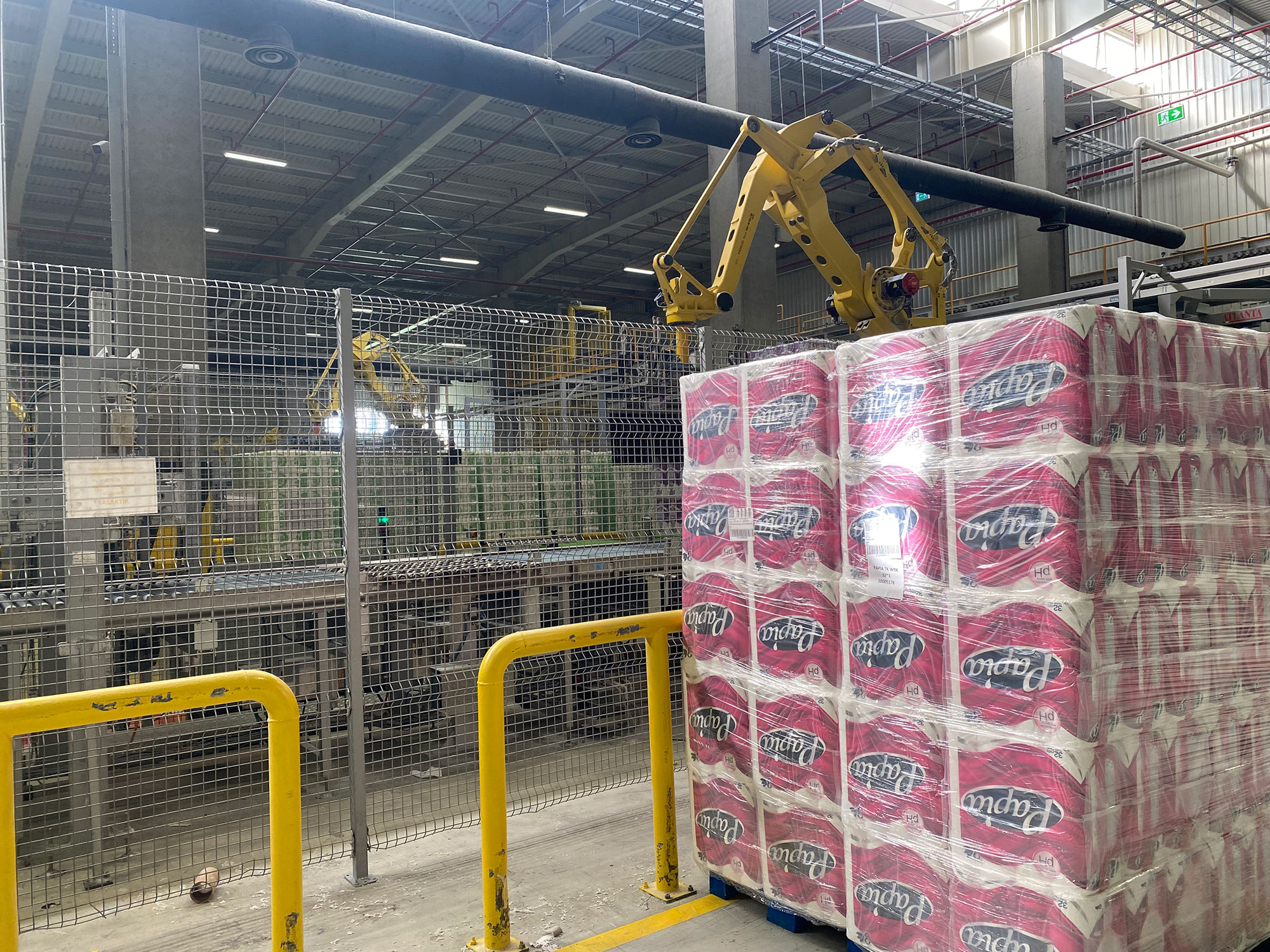
At home, Hayat’s approach is organic and disciplined: “In each market we aim to consume 80-85% of our own tissue production in our own converting operations and to sell the remaining jumbo reels to other converters. This enables us to maintain a strong competitive position in every market in which we are available.”
Growth in Türkiye will continue to come mainly from machinery and converting investment rather than acquisitions: “That has always been our model. We prefer to build up capacity increases by state-of-the-art technologies, as this approach brings us many benefits such as technology advantage, efficiency increase, and easy integration to our existing system.”
With papermaking capacity so far ahead of consumption, the near-term priority is new converting lines, plus further converting capacity in Egypt: “The growth lever right now is converting – turning jumbo reels into finished, branded products more efficiently and closer to demand, rather than adding more tissue production capacity into an already overcapacity market.” Hayat is also in discussions with several industrial zones about land for future expansion, to be activated as supply and demand normalise.
Civelek is adamant that Türkiye will see continued demand growth. Per-capita tissue consumption has risen from around 1.6kg when Hayat entered the sector to roughly 9kg today, and the market has historically grown around 10% a year. Growth this year is expected to be lower, partly because basis weights have fallen by around 10% and consumers are moving to more economical products.
The country’s category mix is also shifting. Toilet paper still accounts for more than 50% of per-capita consumption, while kitchen towel, at around 25%, is growing as households adopt more absorbent, multi-use products – a pattern already seen in mature Western European markets. Tissue is also increasingly used for general cleaning, not just personal hygiene.
Competitors continue to invest despite the overcapacity and several tissue machines, converting lines, and integrated facility investments are currently underway or in the planning stage across the industry.
Civelek says that Hayat sees growth driven by more than market expansion: “Rising consumer expectations and higher product quality standards” are also pushing it to develop innovative branded products, supported by its global R&D centre.
The AfH market also holds substantial potential in Türkiye. He says it has “fully recovered from the Covid period”, and is now “seeing genuinely strong demand – stronger, in some segments, than before the pandemic.” Folded products are leading the way and V-Fold and Z-Fold formats are seeing “a significant increase” in demand: “We’ve had to revise and upgrade our machinery quickly to keep up,” he adds. Economy-tier products are gaining share here too, as in retail.
Hayat is launching a soft-pack V-Fold product which Civelek says reflects the gradual substitution of folded formats for napkins in some uses, although rolled products still dominate. Hygiene awareness also “remains structurally higher” than before 2020, supporting demand for AfH paper and antibacterial wipes.
“AfH is becoming an important export and investment driver,” he adds. “As domestic retail tissue demand faces some pricing pressure from overcapacity, AfH – both domestically and for export – is an area where quality and reliability of supply really matter.”
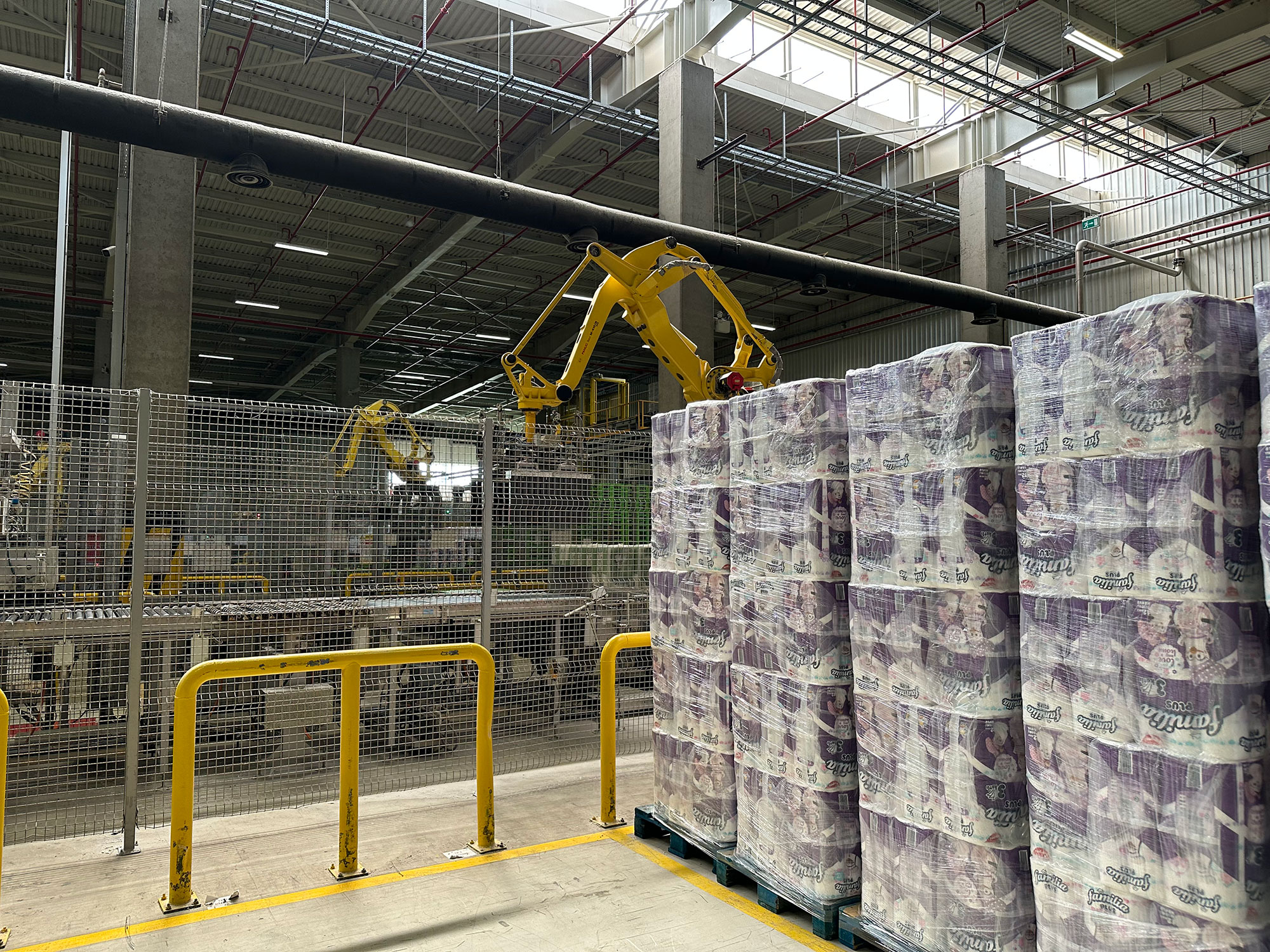
Private label’s share of European retail tissue sales has “risen markedly” over the past decade, and Türkiye is following suit: “While price remains an important factor in consumers’ purchasing decisions, quality expectations are just as influential. Although private label products continue to gain share, we observe a similar trend toward higher quality expectations within this segment as well. As the visibility and consumer acceptance of private label products increase across retail channels in Türkiye, retailers are also raising their quality requirements.”

Economic conditions are accelerating the transformation of the sector: “Consumers have become more conscious and selective in their spending habits, resulting in a shift from premium products toward mid-tier and value-oriented segments. This trend is supporting demand for value-focused offerings across both private label and branded product categories. But expectations of quality and reliability have not fallen. In fact, they have increased. Long-term success will be determined not only by price, but by the overall value delivered to consumers.”
The shift to economy tiers is likely to remain a key opportunity: “It is cyclical rather than structural, as purchasing power stabilises,” he says. “I expect demand to rebalance toward higher-quality, multi-ply products.”
Overcapacity is also pushing Türkish producers abroad: “Türkish producers – including us – are all leaning further into export markets such as the UK, Europe, US, Middle East, and Africa, as a release valve for domestic overcapacity,” Civelek says. Hayat ships jumbo rolls and finished products from its existing sites, and he adds that Türkish producers “have a genuine” cost advantage: “Competitive energy pricing versus Europe, modern high-speed machinery, and strong logistics access to the Mediterranean. That combination lets us export competitively while we wait for domestic and regional demand to catch up with the industry’s installed capacity.”
Energy costs will remain a key factor: “We expect energy prices to remain an important cost factor for the industry, with continued volatility and uncertainty in the coming years. For energy-intensive industries such as tissue, managing energy costs is becoming increasingly critical, not only from a cost perspective but also in terms of long-term competitiveness and business sustainability.”
Renewables are therefore “no longer simply an option, but a necessity.” Hayat has accelerated its solar investments, covering available rooftops with panels and building ground-mounted solar plants in Türkiye, to meet a growing share of its electricity demand from renewable sources. It is also following green hydrogen: “We believe that energy diversification will be an increasingly important competitive advantage for the tissue industry.”
Efficiency is the second strand: “With many years of operational experience, our own engineering teams have developed and actively use AI-supported optimisation software. These systems help us optimise energy consumption and production processes in real time, allowing us to produce more efficiently while reducing energy intensity.”
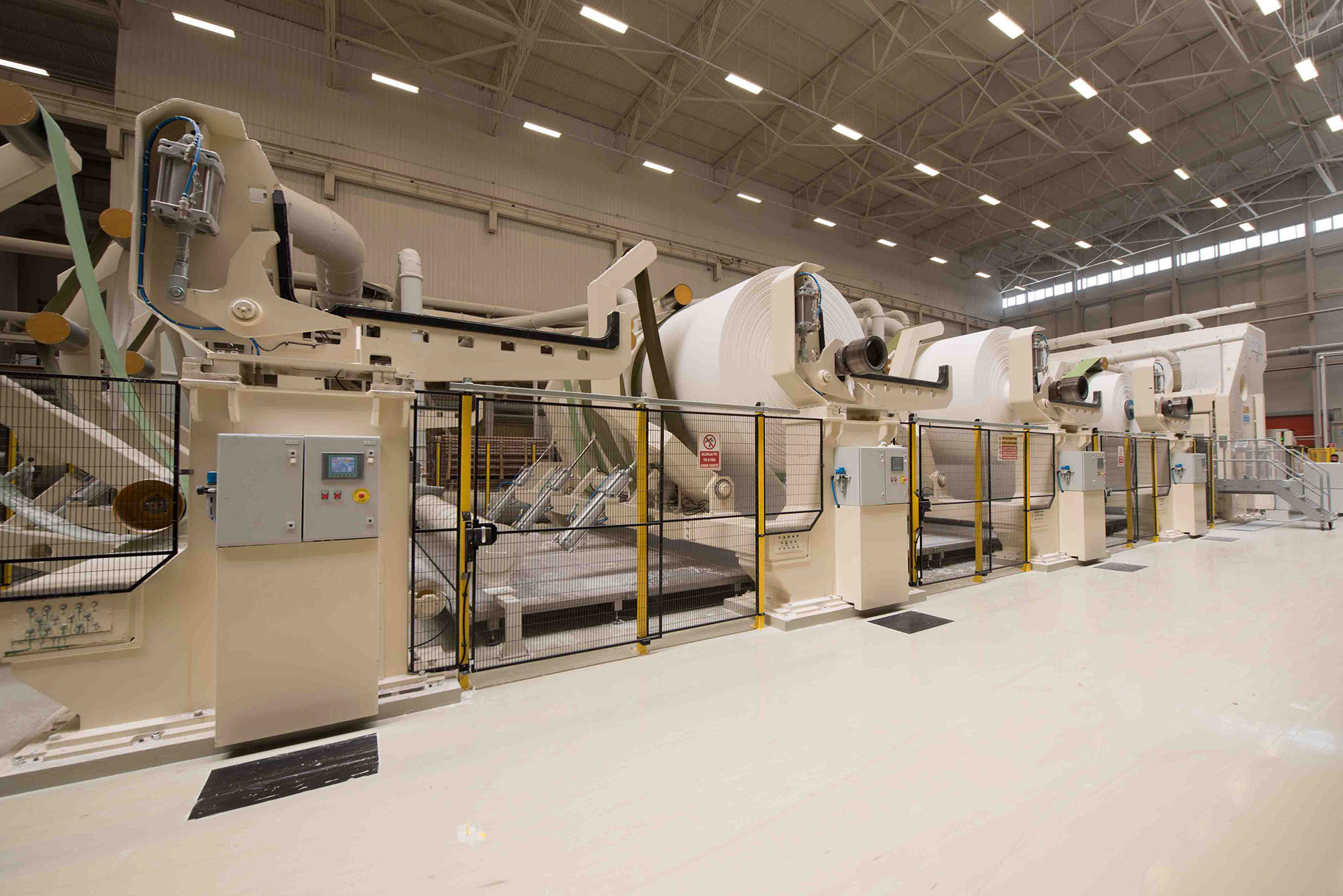
Together, he says these measures support Hayat’s carbon reduction strategy, with the aim of “a significant reduction in our carbon emissions while maintaining the competitiveness and reliability of our production.”
Over the next few years, he says per-capita growth remains a key opportunity: “Consumption still has room to rise toward Western European levels and into broader uses such as household cleaning. And with private label and converting-led growth, we’re seeing private label’s rising share creates an opportunity alongside Hayat’s own brands.”
Yet the challenges remain. Domestic overcapacity is “the single biggest structural issue”, he says. “Competitors keep investing, which keeps domestic pricing under pressure. I expect supply and demand to take another three to four years to rebalance.”
Input cost inflation is squeezing energy, pulp and packaging costs margins globally: “The companies that manage their cost base most tightly, through co-generation, efficient water use, and energy-conscious production, will hold a clear advantage.”
The currency and macroeconomic volatility is also directly feeding into consumer purchasing power and product mix, driving the shift to economy-tier, lower-basis-weight products. He adds that sanctions-related constraints in some countries also currently limit Hayat’s ability to expand capacity, even where consumer demand is strong.
“Overall, I’d say the fundamentals are genuinely positive for us and for the Türkish tissue industry as a whole,” he says. “The real challenge is managing through a period of domestic overcapacity and cost pressure, now compounded by regional conflicts affecting energy prices and availability, logistics disruptions, and similar issues.”
He expects the market to keep growing: “Despite short-term economic fluctuations, Türkiye’s young and dynamic population, ongoing urbanisation, and potential for increased per capita consumption remain key factors supporting the sector’s growth. While volume growth is expected to be more moderate compared to previous periods, we believe demand for tissue products will continue to increase over the medium and long term.”
Rising hygiene awareness, AfH growth and export opportunities all support this view, with “innovation, efficiency, and consumer-focused product development capabilities” set to decide who benefits.
Civelek’s closing message is one of continuity: “The story of Hayat Kimya in tissue has always been one of steady, disciplined growth rather than short-term opportunism. We’ve built our position over two decades through organic investment, technology upgrades, and staying close to what consumers actually need in each market we operate in. We believe in the tissue business and that it will remain genuinely strong and keep growing.
“Algeria represents the next major chapter for us, but our ambition remains the same as it’s always been – to keep strengthening our position as one of the truly global players in tissue.”