














The European tissue market is tightening, sustainability, and low carbon in particular, could become an advantage for any player – but only where the buyer cares, and most probably only when it comes as a co-benefit to the consumer. By AFRY Management Consulting’s Hampus Mörner, Principal, Tino Mäkelä, Senior Consultant, Christoph Euringer, Senior Principal
The first half of this decade put the tissue industry through a stress test few would have designed: hoarding, reduced AfH demand, record-high energy and fibre costs and consumers with squeezed wallets. The industry came through it in better shape than many feared. But calmer waters are not necessarily easier waters. How can sustainability actually help producers hold their ground?
A growing, but maturing market
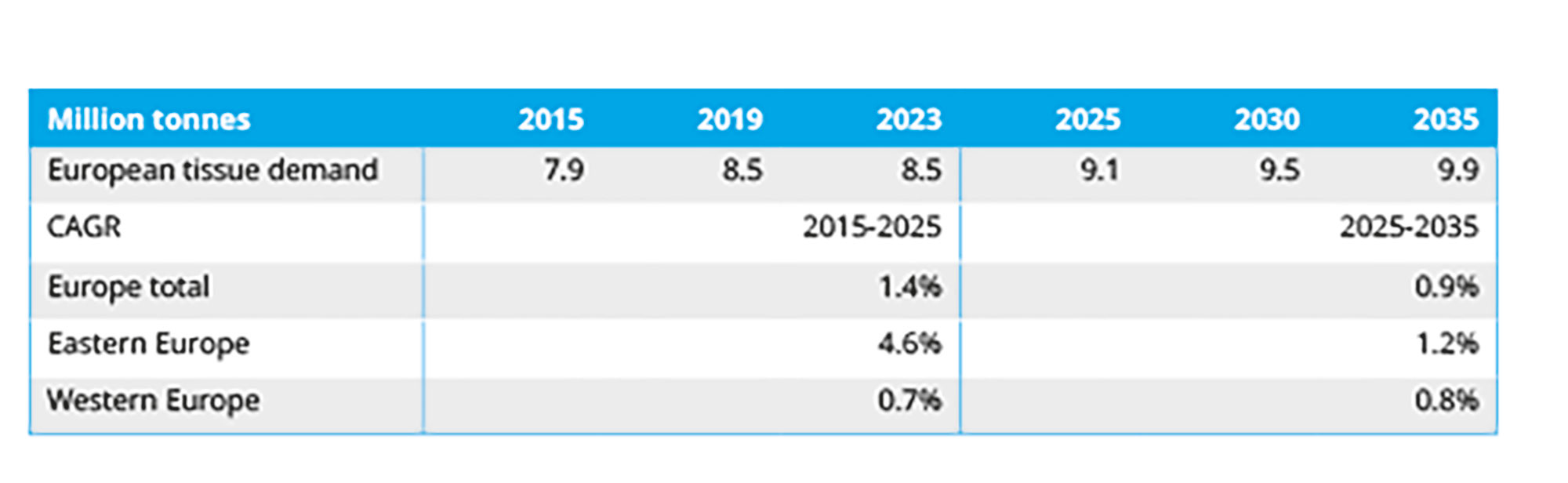
Tissue remains a growth market, which should not be taken for granted among paper grades. European demand grew from 7.9m tonnes in 2015 to about 9.1m tonnes in 2025, or 1.4% per year, and is expected to approach 9.9m tonnes by 2035 (Figure 2). Growth, however, slows to about 0.9% per year. Economy and demographics weigh on the outlook. In short, Europe is becoming a slower and more mature tissue market, where new volumes increasingly must be won from someone else.
More players, more imports – competition is up
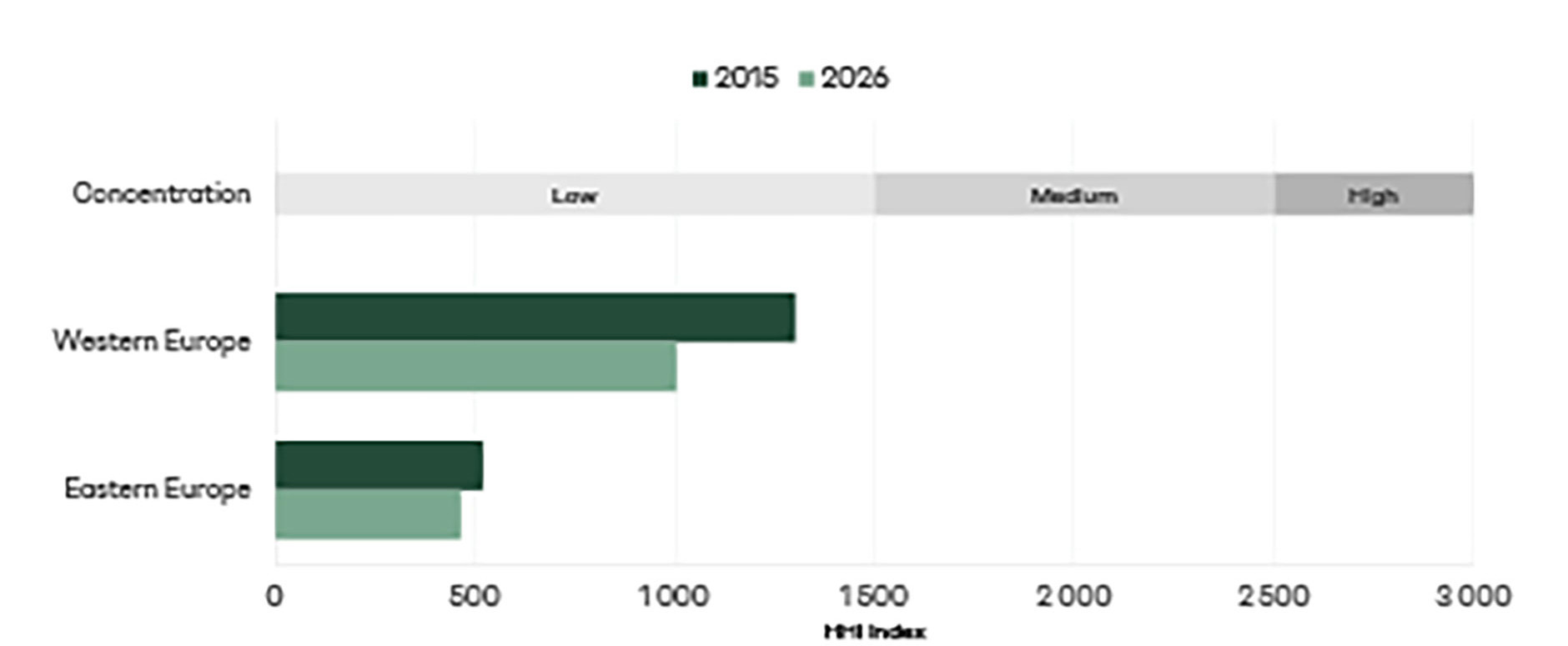
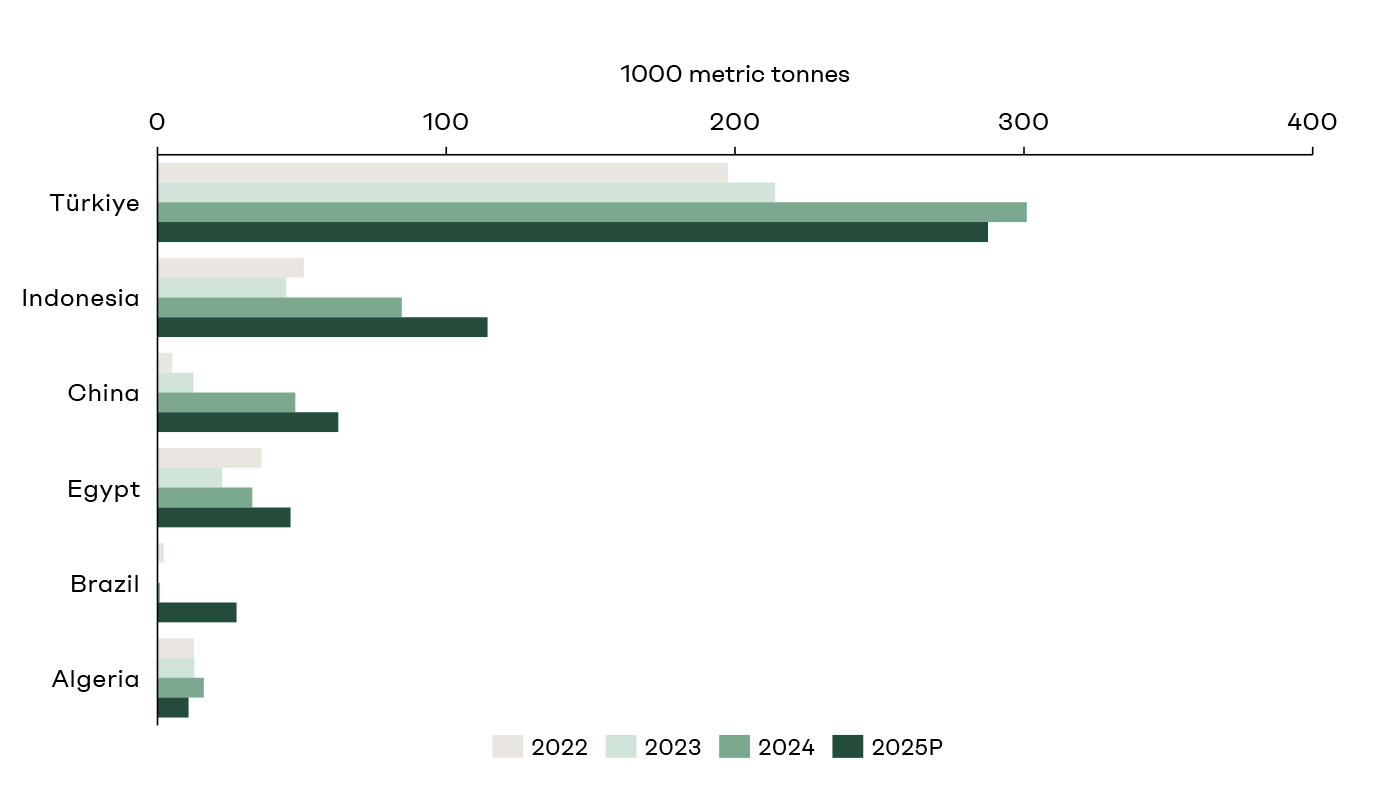
Slower growth would be easier to handle in a consolidating industry, but European tissue has moved the other way. Measured by the Herfindahl-Hirschman Index (HHI) based on total installed tissue paper capacity, concentration in both Western and Eastern Europe has decreased between 2015 and 2026 and remains low (Figure 2). Resilient demand, local markets for bulky products and, until recently, cheap capital have attracted a broad range of investors historically. At the same time, pressure from outside Europe has grown. Trade data shows Türkiye and Indonesia among the largest sources of jumbo reels traded into European markets, with Egypt and China also present in jumbo reels and finished products. Lower concentration, slower demand and more imports add up to a crowded market. Being cost-competitive and efficient is the right to play – the question is what else can make the difference. Sustainability is one lever where many European producers claim an edge.
Low carbon – a European strength, but not a monopoly
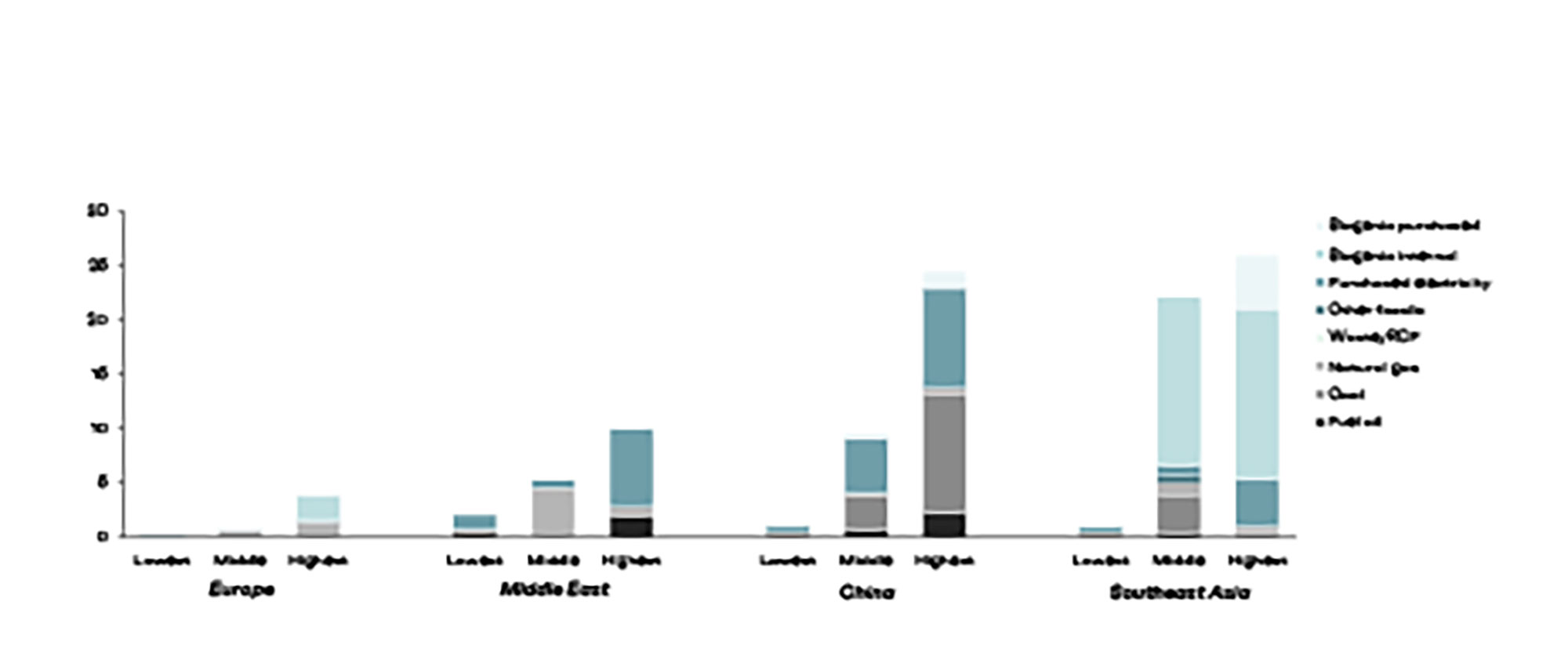
One area where Europe clearly stands out is carbon footprint. Comparing CO₂ emissions per tonne of jumbo reels at tissue machine level, Europe shows both the lowest levels and the narrowest range, (Figure 3). The Middle East, China and Southeast Asia show the widest spreads. The top emitters rely heavily on coal and fossil-based purchased electricity.
Still, low-carbon production is not exclusive to Europe. The lowest emitters in Southeast Asia, where biogenic fuels play a large role, fall within the European range, and European mills still have fossil fuels in the system too. Europe is good, but not always the best. This will remain a priority as the European industry pursues its ambitious decarbonisation targets. The comparison shows that continued improvement is essential not only for compliance, but also to remain competitive for European tissue buyers seeking stronger sustainability ratings.
Who decides? Two segments, two very different gatekeepers
Whether a low footprint turns into an advantage depends on who decides what is used. Here, the two main segments behave very differently. Of the roughly nine million tonnes of European tissue demand in 2024, consumer tissue accounted for about 75% and AfH for 25%.
Consumer tissue: The consumer has the final say and the shelves follow what shoppers buy, with the retailer acting as gatekeeper. Retailers manage many categories, and tissue is only one of them. To demonstrate green shelf space, carbon footprint is a convenient one-size-fits-all KPI that can be applied across the portfolio, while carbon-intensive or deforestation-linked products invite criticism from consumers and NGOs. A demonstrably low footprint can therefore be the route into retail – regardless of whether the supplier is European or not – and help win and keep shelf space, for brands and private label alike.
AfH: Here the B2B buyer decides, while the end user simply uses whatever is in the dispenser. The customer base spans hotel chains, institutions, restaurants, caterers and workshops. Producers typically sell through intermediaries, such as facility managers, rather than directly to end customers, so purchasing behaviour varies by case. Some buyers want a green profile, but for many, tissue is simply a bulky necessity where shortcuts are taken. For those defending their position, this makes AfH the weakest link; for those entering from outside without a low-carbon track record, it is the easiest way in. If carbon footprint is to matter in AfH, a good story needs to be told to these buyers.
Sustainability will not sell alone – but it works as a co-benefit
If consumers ultimately steer consumer tissue, what do they actually want? Public surveys data give a nuanced picture. Some 58% of consumers* say they actively look for more sustainable products. But once they put their shopper hat on and walk into the store, the link breaks. The top barriers are price (42%), not knowing which products are sustainable (32%) and limited availability (26%).
More telling is which claims motivate a purchase: “better for your health” (20%), “feeds my family and one in need” (17%) and “fair wages and safe working conditions” (16%) – all with a personal benefit, not an abstract environmental one.
To tell the full sustainability story in the very short moment when the actual buying decision is made by the consumer is among the hardest challenges for tissue companies. Packaging space is limited and too much information on the packs may dilute the message to be conveyed.
The Ipsos work suggests positioning sustainability as a co-benefit to the consumer – e.g. higher safety, cleaner air, etc. Improved performance connected to sustainability, not sustainability as the core reason to buy, may connect best with consumers.
*Footnote: Source: Ipsos 2026
The recycled fibre puzzle
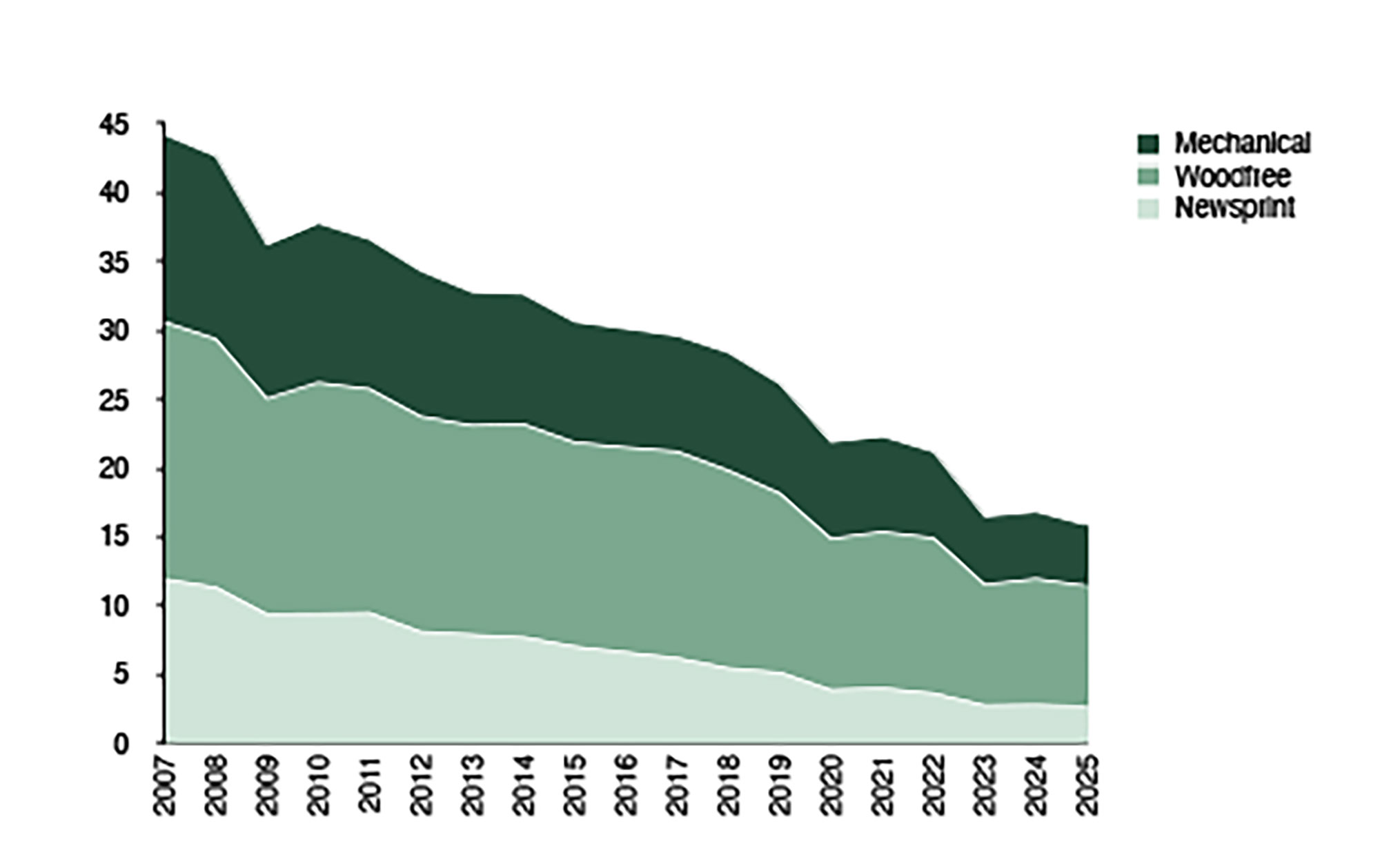
Recycled fibre (RCP) is perhaps the clearest example of sustainability and economics pulling in different directions. RCP-based tissue tells a strong sustainability story and is important in AfH in particular, but its raw material base is shrinking. Since 2007, European graphic paper consumption has dropped by about 28 million tonnes, with newsprint down 77% (Figure 4). This means wider collection areas, rising RCP prices, lower yields, making RCP both a supply constraint and a cost challenge.
Getting high-white volumes directed to tissue and not losing it into the packaging or other paper streams is a key challenge. If the overall amount of sorted white paper decreases in the tissue sector, then it is forced to source volumes which have not traditionally been directed to this sector.
The financial challenge is to be compensated sufficiently for putting recycled products on the market – and here buyers and consumers have been educated for years to expect recycled tissue being cheaper than virgin. Which is becoming increasingly challenging when already today recycled fibre on the paper machine can be as or even more expensive than virgin fibre.
Plastics shows it does not have to be this way. Historical prices show that recycled PET can carry a premium of 30-40% or more over virgin material, which is supported by EU recycled content mandates, brand commitments and constrained supply. And, perhaps most importantly, by consumers never having been taught to expect a lower price for recycled. If RCP is to keep its role in the tissue fibre mix, changing the consumer perception that RCP is valuable is a key task.
The road ahead
The European tissue industry has come through a turbulent period in solid shape, but the coming years are expected to be more competitive than the last. In a market where growth alone will no longer do the job, sustainability may well be what separates the winners from the rest.
Three takeaways stand out:
- Competition is tightening. Demand keeps growing, but more slowly. And lower industry concentration plus rising imports from outside Europe add pressure to the sector. At the same time, availability of high-quality and high-white recycled fibre is decreasing and selected competitors outside Europe are in stronger positions when it comes to CO2 track record than many are anticipating.
- Sustainability is a gatekeeper – and an enabler that needs to be nurtured. Emphasizing the benefits of how tissue improves the sustainability track record also with AfH B2B customers and how they can leverage that advantage with the final “user” will be important.
- Sustainability works best as a co-benefit. Developing easy shortcuts for how a sustainable product supports during the buying decision is the lower hanging fruit.