| |
ICELAND
WORLD'S FIRST 100% CARBON NEUTRAL TISSUE
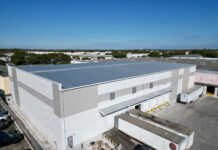
Icelandic Paper Group is planning to build a greenfield tissue mill near to a break bulk and container harbor in Iceland. The first machine, which could start next year, may make TAD or conventional paper, according to a company spokesman. Initially production will focus on bathroom and kitchen towel. A second machine for the same grades is also planned.
The mill will be the first in Iceland. It will base its production on 100% imported virgin pulp and will export all the output as parent reels.
A unique feature of the new mill is that geothermal hot water and steam will be used to dry the paper. All the mill s energy will come from a geothermal power plant located next to the mill.
According to the company, the main benefits of this project are: that is carbondioxide neutral, with reliable long-term supplies of geothermal steam occurring naturally in the vicinity, and power also generated by the steam from a power station that is already running. In addition, there are low infrastructure costs and an ideal location of the mill between Europe and North America.
|
FRANCE
NOVACARE TO CUT JOBS AT FRENCH TISSUE PLANT (News supplied by RISI)
Novacare has announced plans to restructure its business, which will lead to the loss of 189 jobs out of 560 at its mill in Lavalsur- Vologne, France.
The company aims to shut three of the facility's seven diaper production lines. The firm did not specify the capacity details of the units, but stressed that it would continue to invest in the four remaining lines to improve product quality.
Novacare also plans to reorganize its business into two units. One will look after sanitary papers, the other diapers. The company is currently in talks with employee representatives and hopes to kick off the restructuring toward the end of January.
The Laval-sur-Vologne mill houses two tissue paper machines, PMs 2 and 3, which have a total capacity of over 40,000 tons/yr. The company had been looking to upgrade PM2 back in 2005, but the project has been shelved for the foreseeable future. The firm did not want to go into the specific reasons for abandoning the investment.
The US private equity fund Matlin Patterson took control of Novacare toward the end of 2006.
UKRAINE
JSC UKRPAPIRINVEST TO ENTER TISSUE PRODUCTION
JSC Ukrpapirinvest (UPI-Group), a Ukrainian company based in Kharkov, has recently signed an order with Toscotec SpA for the supply of a complete tissue plant. The start-up of this unit is scheduled for the beginning of 2009.
Born from a pool of experienced entrepreneurs, UPI JSC Ukrpapirinvest is going to set the new quality standards for domestic tissue production, says a press release from Toscotec. The company will produce both finished products and jumbo reels for local converters. The plant will be installed in the surroundings of Kharkov and the products will be sold both in Ukraine, the nearby region of Russia and the neighbor countries.
The project foresees the installation of a Modulo Plus complete plant. The Modulo Plus is a crescent former unit with a daily production of 60 tons/day, an operating speed of 1200 m/min and a net paper width of 2.75 m. The machine features a 3200 mm steel yankee dryer; which provides a substantial increase in dryness performance and a marked reduction in energy consumption, according to Toscotec. So far Toscotec, which launched this technology in 2000, has sold 20 steel yankee dryers with diameters up to 15 (4572 mm) and a max operating pressure of 10 bar.
The scope of supply includes the stock preparation plant for virgin pulp, the tissue machine with the relevant auxiliaries, a complete slitter rewinder with stretch wrapping unit and electrification and control system including a quality control scanner. Toscotec will supply also the supervision of the installation, start-up assistance and training program for mill staff.
|
ITALY
LUCCHESE SELLS ON-LINE
Cartiere Lucchese has started to sell its Grazie line of products on the internet, making it available for home delivery to buyers in Italy. It claims to be the first company to offer such a service.
The initiative follows requests from a number of cooperative groups of buyers (known as GAS in the Italian acronym). They are particularly keen to purchase “biological and eco-friendly” products, according to Lucchese. Grazie products, which include toilet paper, kitchen towel, facial tissue and hankies, are sold as luxurious but at the same time environmentally friendly, produced without cutting down any trees, with no use of pollutants in the manufacturing process, and with biodegradable packaging, according to the company.
The only difference between buying Grazie in the supermarket and on line is that internet purchases are subject to minimum quantities, variable according to the specific product. Deliveries take place within 2-4 working days of orders being placed, with payment by credit card.
Purchases can be made at www.grazie.it/shop.
FINLAND
METSÄLIITTO GROUP ACQUIRES 14% MORE IN METSÄ
In a Stock Exchange release on 30 November 2007, Finland’s Metsäliitto Group announced it had acquired shares in its subsidiary Metsä Tissue from Tapiola Group. Metsäliitto's holding in Metsä Tissue had previously been 56.1%, and the holding increased by 14.4% to 70.5%.
After the acquisition the ownership division of Metsä Tissue is as follows: Metsäliitto 70.5%, Varma Mutual Pension Insurance Company 8.4%, the insurance company Sampo Life 6.1% and Jozef Antofík 15.0%.
ENVIRONMENT
SÖDRA CELL CONDEMNS ‘FSC OR BUST’ ATTITUDE
Sten Holmberg, the president of Europe’s largest market pulp producer, Södra Cell, has warned of the dangers of a monopoly forest certification market, where FSC is seen as the only truly environmental choice when it comes to certified pulp and paper.
“Something is happening in the UK in the name of forest certification which we think has little to do with sustainability but everything to do with perception and nothing to do with freedom of choice. Largely due to pressure by some NGOs, it’s ‘FSC or bust’ as far as many retailers and publishers are concerned. We think there is a real and present danger that more retailers will feel the pressure to demand only FSC-certified pulp and paper. If that happens, there is a great risk that the UK will find itself with a monopoly market, a situation which can benefit very few in the long run.”
Speaking at the BWPA/Hawkins Wright Symposium 2007 during Pulp Week in London last week, Holmberg was sharing the podium with Duncan Pollard, director of Conservation, Practice & Policy at WWF International, a group which openly backs the FSC. However, Pollard went on to acknowledge during the question session that Södra’s forestry practices were regarded within the WWF as ‘of the highest standard’. He also paid tribute to the pioneering work Södra did in the 1990s in the area of green management plans, a model which was subsequently adopted on a wide scale by Swedish foresters.
Holmberg went on to point out that Södra has no axe to grind with the FSC. On the contrary, Södra Cell produces some FSCcertified pulp, as well as PEFC. But, he said, the growing recognition of the FSC logo on products has less to do with its environmental superiority over PEFC and more to do with the fact that FSC has been much better marketed than PEFC.
The amount of FSC pulp on the market remains limited with only around 5% of global softwood market pulp currently FSC certified. In the face of tight FSC-certified paper supply, end users are putting pressure on their paper suppliers (and in turn pulp suppliers) to switch to FSC. But Holmberg doubts this would make life easier, arguing that it could well create a monopoly market in the UK which would benefit very few.
“We strongly believe there has to be a market for more than just one forest certification scheme...and there is a rightful place in the market for PEFC. It can be in no-one’s interests to see buyers demanding FSC just out of fear of a negative reaction from some NGOs. Södra has a long history of sustainable forest management which is one of our key values. We are proud to be PEFC and do not intend to turn our backs on a scheme we have helped to develop,” says Holmberg.
| |