World News
Europe


UNITED KINGDOM
K-C INSTALLS RANDALL’S SIMPAK 1800 COMPACTOR FOR HAND TOWEL WASTE
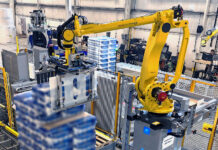
A Randalls Simpak 1800 static waste compactor has recently been installed at Kimberly-Clark’s plant at Flint, where paper towels and toilet tissues are made. The compactor processes waste from hand towel manufacture and was installed by Paperback Recycling and Collection Ltd, a locally based Deeside recycling specialist, which has a fiveyear contract with Kimberly-Clark.

The Simpak 1800 replaces open-top skips, which needed to be emptied frequently, incurring transport and labour costs and which could litter the site with paper waste in windy conditions. The payload of the Simpak compactor is 9 tons, double that of a skip and means that less frequent collections are necessary, with an associated reduction in transport costs. The compactor processes 100 tons of paper waste each week and two compaction containers have been provided so that there is always one available. Eight open demounted containers were also supplied by the Skip Units Group.

GERMANY
CONTRASTS SHOW AT PTS TISSUE SYMPOSIUM
Germany shows continued growth at both ends of the market, while the middle ground is being squeezed, according to a paper at the recent PTS Tissue Symposium held in Munich. Private label continues to dominate, reaching 64% of the German market in 2007 for all tissue, the highest percentage for any product.

These were among the conclusions presented by Inga Havemann of GfK AG Bereich Panel Services, a company specialising in consumer research. Based on interviews with 20,000 households and 25,000 individuals, her company has established a range of data on the industry.

In 2007 discounters such as Lidl and Aldi accounted for more than 55% of toilet tissue sold, 47% of paper handkerchiefs and 54% of kitchen towels. In all cases the 2007 figures wre slightly down on 2006. Drug markets, supermarkets and hypermarkets accounted for almost all the rest, with other outlets representing an insignificant 2.4-3.1% depending on product.

In volume, total market size declined between 2004 and 2007, though in millions of Euros it rose fractionally over the four years. While toilet tissue volume was stable, though, that of kitchen towel fell 2.5% and that of handkerchiefs by 0.6%.

Another form or polarisation is also noted: that between rich and poor. According to Havemann, 26% of Germans interviewed “can hardly afford anything”. At the other extreme 27% “can afford almost everything”. As might be expected this has an impact on buying patterns (see Table).

Two billion people around the world now have middle-class incomes, turning many products, including tissue, into global consumer items. A number of key global drivers are shaping the market, including status lifestyle, health and wellbeing, premiumisation, sustainability and green ethics, and the ‘expectation economy’, Euromonitor’s Irina Barbalova told the conference.

The world picture of tissue demand and growth has changed dramatically in recent years. Today China is the second-largest market in the world, she said. Its consumption amounts to $4.2 billion, far behind the $12 billion of the USA but far ahead of other highconsumption countries such as Japan ($2.8 billion), the UK ($2.7 billion) or Germany ($1.9 billion). Perhaps equally striking is that Mexico, with consumption of $1.5 billion, and Brazil ($1.4 billion) are at such high levels.

And of course the emerging markets have much higher growth rates than the established countries. Latin America, for example, has added $2 billion since 2001, representing an average compound growth rate of 12%/yr for the period. Eastern Europe (>7%/yr) and the Middle East/Africa (6%/yr) are also growing rapidly.

While the rich western European countries are seeing slow growth, Europe can still expect significant expansion over the years ahead, according to independent consultant Guy Goldstein. His view is that, from a level of 7.4 million tons in 2007, the European market can be expected to rise to 8 million tons by 2010 and to perhaps 9 million tons by 2015. This growth means 1.6 million tons of new capacity in eight years. It will come predominantly from the regions that are currently lagging in GDP:

One factor that will change the picture in Eastern Europe is the development of distribution. Mom and pop shops are under great pressure from the invasion of large supermarket chains, such as Tesco, Carrefour, Ramstore, Migros, WalMart and others. “Soon, the hard discounters will join the fun and proliferate like they are doing out west.” There will also be deep changes on the production side of the business. Big western companies, such as SCA, K-C, G-P but also dynamic smaller groups such as Sofidel, Metsä, Tronchetti, Wepa, will move ahead. Local companies will have to change their ‘think small’ attitude if they are to offer serious competition. “Small Is no longer beautiful; efficiency is the name of the game.”

Looking ahead to 2015, Goldstein said, it is hard to guess who will still be there but he offered a few forecasts:

  • SCA will rationalize further, will complete its inroads towards the east, will definitely remain the European leader
  • K-C could maintain its share and consolidate
  • G-P could still be around rising the waves...or broken down in pieces
  • Sofidel will move aggressively towards the 1 million ton mark, while Mets , Tronchetti, LPC, Wepa continue to grow slowly but surely
  • The locals in the new EU countries are getting serious about doing business in a big way.

In addition to a number of market-oriented presentations and a couple on management, the PTS symposium included some 15 technical papers, covering topics from energy to formation, drying to converting, chemicals to the environment. To know more, contact PTS in Germany: angela.wittmann@ptspaper.de or check the web site: www.ptspaper.de.

RUSSIA
SYKTYVKAR INSTALLING TISSUE PM (News from RISI)
Syktyvkar Tissue Group is in the final stages of installing a new Metso Paper tissue machine and a slitter/rewinder at its facility in the republic of Komi, Russia.

Start-up of the new equipment is scheduled for July. The new crescent former machine, PM2, will be able to make up to 92 tons/day of tissue in a basis weight range of 13-28 g/m2, based on 100% virgin pulp. The mill's total tissue capacity will rise from 22,000 tons/yr to 54,000 tons/yr. Output will be sold on the Russian market.

Syktyvkar Tissue Group currently operates one machine, which produces tissue from recovered fiber in a basis weight range of 17-33 g/m2.

SOVETSKY SWITCHES PULP OUTPUT (News from RISI)
Sovetsky Pulp & Paper Mill has switched pulp production from sulfite to viscose at its plant in Sovetsk, Kaliningrad, Russia. The line’s capacity remains unchanged at 80,000 tons/yr.

The company is currently carrying out trial runs on a second-hand tissue paper machine, PM 5, at the site. The unit, which has a capacity of 16,000 tons/yr, is due to start commercial production in April.

Sovetsky Pulp & Paper Mill is also set to switch the production of PMs 3 and 4 from offset paper to fluting and testliner by the end of next month due to poor offset paper demand. The machines’ stock preparation line has been upgraded ready for the production change. The two units currently manufacture 24,000 tons/yr of offset paper in total. The new production levels following the changeover were not revealed.

The company is also looking into boosting the site’s tissue capacity further. The firm will either buy a new machine or install a bigger Yankee cylinder on PM 5. A decision will be taken by the end of the year.

ANGARA PAPER PLANS NEW MILL (News from RISI)
The Krasnoyarsk regional authorities have confirmed plans to build a 900,000 ton/yr bleached softwood kraft pulp (BSKP) mill in Lesosibirsk, the Yenisey region, eastern Russia. The facility, Angara Paper Wood Chemical Plant, will also produce 60,000 tons/yr of tissue, 220,000 tons/yr of chemithermomechanical pulp, 320,000 tons/yr of coated boxboard, and 320,000 tons/yr of uncoated boxboard. Angara Paper will invest Rouble 30.7 billion ($1.3 billion) in the project. The mill is due to start up in 2011.

Earlier this year, the Ministry of Industry and Energy of Russia included the Angara Paper project into the list of priority investment projects. Among other preferences, a priority status implies a lease agreement of forest land without auction, which will enable the mill to utilize 5 million m3/yr of wood for its pulp production. The investor hopes to sell its pulp in China, Europe, southeastern Asia and the USA.

The Krasnoyarsk local authorities have also announced that construction of Boguchanskiy Pulp and Paper Mill in Yarki, the Boguchansk region, is scheduled to start toward the end of May. The project will include a 730,000 ton/yr BSKP mill.

The projects in Lesosibirsk and Yarki are part of the regional development program of the Lower Angara region for 2006-2015. According to the regional authorities, investments in building transport infrastructure and developing the natural resources potential in the area will reach a total of Rouble 223 billion.

HUNGARY

BARGAIN OF THE MONTH

A really good deal – and a bit upmarket Left, our bargain of the month, spotted in Tesco in Pecs, Hungary. An eight-pack of toilet rolls on special cost just 169 Forints or 21 Forints per roll. That’s just over $1 for eight rolls or just 13 US cents (€0.08) per roll. On the right, the premium service: €3 for a six pack of hankies in Ferrara, Italy. That’s almost as much per hankie as per toilet roll in Pecs. But the hankies come with a smile – and the salesman helps you park your car as well.

SWEDEN
LPC'S SWEDISH TISSUE STARTS NEW PM
Swedish Tissue, a specialist division of the LPC Group, has just added an innovative new paper machine to its existing operations at the Kisa Mill. Designated 'PM3', the new machine was switched on in early March and will supply incredibly diverse and customer tailored specialist tissue to converters in the personal hygiene, catering and medical markets – allowing them to increase the quality of their own products. This innovation will expand LPC's portfolio of pre-conversion paper for the specialist sector, which is already one of the largest in Europe.

PM3 will work alongside the existing paper making facilities and several rewinders at Kisa, giving Swedish Tissue the scope to provide a wide range of papers for different applications. The plant also boasts a state-of-the-art, full-colour printing capability that allows Swedish Tissue to offer customers much more than just plain white paper. Tissue produced at Kisa is distributed all over the world to be converted into products such as baby diapers, wash cloths, feminine hygiene & incontinence products, table napkins and medical supplies – as well as kitchen roll and facial tissue.

The new machine also means that Tissueflex technology will be available from two plants within the LPC Group, giving it the capability to manufacture very high volumes of tissue at the highest quality.

SLOVAKIA
SHP PICKS SUPPLIERS FOR DIP REBUILD (News from RISI)
Slovakia’s SHP Group has selected the main suppliers for an overhaul of the deinked pulp (DIP) plant at its Harmanec mill in Slovakia.

Voith Paper will take care of the flotation and microflotation systems, Metso will upgrade the bleaching and dispersion, while local producer Vanex will see to the sludge dewatering. The rebuild will kick off in August and is expected to be completed in April 2009. Metso already upgraded the DIP plant’s coarse and fine screening equipment in 2006. The upgrade will enable SHP Group to use low quality recovered paper to produce high quality bleached paper.

The group also plans to invest in biological wastewater treatment plants at its three facilities over the next couple of years. Last year, it invested €3.2 million ($4.9 million) in one such plant for its Harmanec mill. The turnkey project was designed and carried out by the local company Hydrotech.

SHP Group plans to carry out a similar project at its Slavosovce mill in the Kosice region of Slovakia this year. The group’s Celex plant in Banja Luka, Bosnia, will be kitted out with the necessary equipment at a later date. The Celex mill can produce 35,000 tons/yr of tissue paper on one machine, PM 2. The unit’s output is processed on site into toilet paper, kitchen rolls, napkins and handkerchiefs. SHP Group plans to upgrade one of the plant’s converting lines this year. The facility houses another unit, PM 1, which is capable of manufacturing 10,000 tons/yr of crepe paper, but is currently idle.

The Harmanec mill houses one machine, PM7, which can make 45,000 tons/yr of tissue paper, while the Slavosovce plant houses another unit, PM8, which can produce 18,500 tons/yr of tissue paper.

METSÄ TISSUE’S ZILINA MILL ON THE ROAD TO RECOVERY
Production at Metsä Tissue’s Zilina mill has quickly reached normal level after the warehouse fire on 2 March 2008. Normal production efficiency is seen as a prerequisite and a good starting point on the way towards normal deliveries. The Easter period was used by several Metsä Tissue mills to catch up on product availability. Although customer deliveries, as such, are mainly as requested, the offered product portfolio is still limited. The company is working strives for a full recovery in the coming months.

“The previous month has been challenging and we still have a lot to do. We are grateful for our customers’ support and understanding. All of Metsä Tissue’s mills are supporting the stock building in order to normalise the product portfolio as fast as possible.” explains Olli- Matti Tahvanainen, SVP, Consumer Central and Eastern European business. “Another positive piece of news” he continues, “was the unexpected high consumer demand for Zilina’s major brand Tento last month. On top of this, we successfully launched Metsä's Tissue’s Lambi brand onto the market only one week after the fire.”

The company has wasted no time in a process to build a new warehouse. Planning is going well and the target is to have a state-ofthe- art warehouse ready by the end of this year. Current warehousing is partly outsourced to an external warehouse provider.

NEW CFO
Markus Holm, has been appointed chief financial officer with effect from 25 March 2008. He previously worked as finance director at GlaxoSmithKline Oy. He is based in Espoo and reports to Hannu Kottonen, CEO. He is also a member of the corporate management team.

ITALY
FENILI MILL BACK ONLINE AFTER FINANCIAL CRISIS
Industria Cartaria Fenili, formerly Cartiere Fenili di Guamo, has restarted production at its tissue mill in Lucca, Italy. The company is renting the old plant and has re-employed 27 workers, about half the number originally employed.

The site’s two machines were both halted at the beginning of December 2006 after Cartiere Fenili ran into financial difficulties due to bad debt. The 18,000 ton/yr PM1 came back online on 27 February. The plant’s other unit, the 30,000 ton/yr PM 2, is expected to be sold.

NEW MARKETING DIRECTOR FOR LUCCHESE
On 1 April Philippe Champion took up the position of group marketing director for the consumer business with Cartiera Lucchese. He joined Cartiera Lucchese Group some months ago as marketing director of Lucart France, the group company in charge of the French and Western European markets.

Besides the new position, he will remain marketing director of Lucart France, while the consumer marketing director for Italy and Eastern Europe will remain Massimo Gai. His primary target is to coordinate marketing activity in the consumer markets of all the group companies, to better exploit all possible synergies and marketing and productive potential.

FINLAND
NEW COLLECTIVE AGREEMENT CONCLUDED IN THE PAPER INDUSTRY
The Finnish Forest Industries Federation and the Finnish Paper Workers' Union have concluded a new collective agreement covering workers in the paper industry for the period 1 June 2008 to 31 March 2010.

Wages will rise by about 4% at the annual level, the pay system will be reformed and workers' job security will be improved in the face of restructuring. The present collective agreement expires at the end of May 2008.

The paper industry will adopt a new pay system that will promote workers' multiple skills. The pay system will provide opportunities to diversify tasks and encourage workers to continue training with the help of incentives and personal development plans. The new pay system will improve the availability of labour and thus support business operations.

The new collective agreement includes cent and euro wage increases and will raise costs by about 4% a year. The new agreement also contains solutions that will allow plants to adopt flexible working hour models, increase occupational wellbeing and strengthen job security in restructuring situations.

"In my opinion the solution is a balanced whole that genuinely takes both sides' views into consideration. The agreement also includes numerous positive changes in workers' conditions of employment. One important goal of the agreement is to increase real cooperation at the national and local level. I also consider it positive that we were able to reach an agreement in good time before the expiration of the old agreement, without outside assistance and without confrontation," says Mr Jouko Ahonen, the president of the Finnish Paper Workers' Union.

"Together with the Paper Workers' Union we have achieved an important negotiation result that will support the paper industry's ability to react to market changes in the face of restructuring as well as the broad development of workers' skills. The new pay system will improve future possibilities for both employers and workers. This is a step in the right direction and provides a good basis on which to continue development according to the principle of continuing negotiation," says Jari Forss, senior vice president, labour market policy at the Finnish Forest Industries Federation.

FRANCE
ESTABLISHMENT OF APEX FRANCE
Apex Group, which makes anilox and metering rolls, has opened Apex France to cope with the demand of the market. Apex France is headed by José'8e Moreira, who is also responsible for sales in south-east France. Jean-Pierre Verne is appointed for sales in north-west France, while Nathalie Duval is commercial assistant in the office in Montboucher sur Jabron.