|
|
| OCTOBER / NOVEMBER 2009 | Home |
| |
 |
Operation Report: Pindo Deli – Sound foundation, bright future
Imagine a nation with proven forestry expertise and abundant resources for
fastgrowth plantations, and a large, young population making up a promising
market. Add to that a resilient economy, a democratic government, a talented
workforce and investors with plenty of entrepreneurial spirit. Put it all
together and you have Indonesia. And it's hard to think of a place that has
a better foundation for a tissue industry.
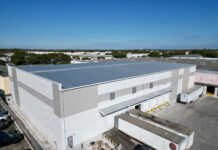
Pindo Deli is one of the leading tissue producers in Indonesia and part
of the APP Group. The company operates two sites in Karawang, about 60 km
from Jakarta. Pindo I, the original site set up by four paper traders in 1976
and acquired by the APP Group in 1992, is home to the company's first tissue
machine, PM5. Its second machine, PM11, was installed at the nearby 450 hectare
Pindo II site. “Pindo II is a larger site that gives us room to grow,” says
Andy Hsueh, Head Of Tissue Production Division, Pindo Deli.
The Karawang location offers several advantages for tissuemaking. “Pindo
Deli is near the capital, Jakarta. And it's located in Java, which is the
most highly populated island in Indonesia, and the largest market in the country,”
says Pronob Banerjee, Director, President's Office, Pindo Deli. “The mill
is also close to the port at Tanjung Priok,” he adds.
|
|

|
Tissue production at Karawang is based on 100% virgin fibre. The mill uses
bleached hardwood kraft pulp supplied by sister companies in the APP Group from
plantationgrown acacia mangium, as well as some imported Brazilian bleached
eucalyptus kraft pulp. “The bleached hardwood kraft pulp we use has brightness
of 88 ISO,” says Tien Johanna, head of production / engineer EMS, Pindo Deli.
Hardwood pulp makes up about 80% of the mill's needs, while imported softwood
kraft pulp makes up the remaining 20%. “The NBKP has brightness of about 90
ISO,” says Tien Johanna.
There are separate stock preparation lines for hardwood and softwood pulp,
plus a broke handling line. The stock passes through high density cleaning,
deflaking and refining stages. Resin is added to impart wet strength, and starch
and biocide to improve dry strength. The stock passes through vertical screens
before it is fed to the headbox on the tissue machine.
HIGH SPEED CRESCENT FORMER
PM11, which started up in September 1997, is a 5.5 m wide Andritz crescent
former machine that delivers superior runnability at high speeds. It has a design
speed of 2000 meters/min, and Pindo Deli has surpassed this under operating
conditions.“PM11 ran at 2100 m/min on 31 March 2004,” says Andy Hsueh.
PM11 features a two-layer headbox that produces a layered sheet, with soft,
short-fibre pulp on one layer and strong long-fibre pulp on the other. This
multi-layering gives the sheet high standards of strength and surface softness
at a comparatively low basis weight, thereby saving on furnish cost.
The former is followed by a conventional steam-heated Yankee dryer, where
air is blown onto the sheet at high temperature to dry the sheet. Drying is
followed by creping with a doctor blade. Output is facial, napkin and bathroom
grades in the basis weight range 13.5-44 g/m2.
Next, a Honeywell Measurex scanner inspects the moisture content and the cross
direction basis weight profile of the creped sheet. A pope reel and two winders
complete the line. Both winders were supplied by Voith Sulzer, and operate at
1500 m/min.
PM11 turns out both tissue for on-site converting and jumbo rolls for converting
customers. Finished jumbo rolls are wrapped on two lines supplied by Lamb. Each
line can wrap up to 48 rolls/hr and handle rolls of up to 1.8 metres in diameter.
Wrapped rolls are labelled and bar coded before shipment to customers.
BREAST ROLL FORMER
PM5, Pindo Deli's older machine at Pindo I, is a 2.9 m wide machine supplied
by Jih Shine Machinery, Taiwan, that came on stream in 1990. The hood was
supplied by Metso. It is slower than PM11, and operates at 660-1000 m/min.
It is based on breast roll technology and features suction removal of water
between the headbox and the inclined wire section. PM5 has an Accuray quality
control system from ABB.
There are two Jih Shine slitter rewinders at the end of the PM5 line that
turn out rolls of up to 1.84 metres in diameter. The tissue machine produces
facial, napkin, kitchen towel, bathroom grades, diaper base paper and MG
paper of 13.5-44 g/m2.
ON-SITE CONVERTING
Pindo Deli Karawang turns out a full range of converted products in rolls,
including toilet tissue, kitchen towel, hand roll towel, centre flow roll
towel and industrial roll towel, as well as folded products – handkerchief,
facial box, facial soft pack, and inter-fold and multifold towel.
The roll product converting area has several lines, including:
|
|

|
Perini 1 and 2 (for making plain and embossed branded toilet roll and kitchen
towel in standard sizes), followed by three Casmatic packaging lines,
- Perini 3, a Perini Sincro line (making hand roll towel, industrial roll
towel), followed by a Casmatic line,
- a Chan Li, Taiwan, line (for private label toilet roll and kitchen towel),
and a Casmatic line, and
- a Sintesi line (for antibacterial toilet roll and kitchen towel).
The folded product converting area is extensive as well. There are eight handkerchief
lines, including two hanky machines from Winkler + Dünnebier (one for standard
size and one for compact hankies). The hankies are impregnated with aloe vera
and eucalyptus scent, and packaged on a line from Senning Verpackungsmaschinen
in bundles of six or 10 individual packets.
Most of Pindo Deli's facial tissue for the domestic market is produced in
soft packs rather than boxes. “Soft packs can be readily compressed to lower
the cost of transport”, says Mohammad Kartika, Head Of Converting Tissue Department.
There are 12 machines for turning out soft pack facial tissue – 10 from Chen
Rong Machinery, Taiwan, and two from W + D. In addition, three machines (two
from Chen Rong and one from Changyou Machinery) turn out bulk folded facial
tissue in one kg soft packs – known as facial “kiloan” in the Indonesian market.
“We make both perfumed and non-perfumed facial tissue”, says Mohammad Kartika.
Pindo Deli produces napkins on three machines from Hobema Maschinenfabrik
– sizes and colours vary for cocktail, luncheon and dinner types and printing
is optional. Finally, nine Chen Rong machines produce multi-fold towel.
STRONG BRANDS
Pindo Deli markets its products under several brands domestically – Paseo,
Nice, Livi, Toply and Jolly – and turns out private label brands for demanding
local and overseas clients.
Overall, Pindo Deli hold a commanding presence in the domestic market.
“We hold about 60% share of the overall facial and toilet tissue market,”
says Hoany Muljadi, Director, Tissue Division.
Ms Muljadi gave a detailed breakdown for each brand. “The premium Paseo
brand has a 24% share of the (facial and toilet tissue) market,” Ms Muljadi
says. “The perception of Paseo is that has higher quality than (rival premium
brand) Tessa,” she says.
The mill also makes mid-priced brands. “Nice (facial and toilet tissue)
is positioned as a daily use, everyday low price brand,” says Ms Muljadi.
“It has about 11% share of the market”.
Pindo Deli aims the Jolly brand at the lower end of the market. “This
brand serves traditional markets,” Ms Muljadi says. This includes smaller
stores and hawkers, she explains. Finally, napkins are marketed under the
Toply brand, and away from home grades under the Livi brand, she says.
All of the mill's output meets US Food and Drug Administration standards
for direct contact with foodstuffs and similar Union Internationale des
Laboratoires Indépendants standards. And the mill's products have also been
certified as complying with Halal requirements from Majelis Ulama Indonesia
to suit the requirements of Indonesia's majority Muslim population.
|
|


|
CHALLENGE AND OPPORTUNITY
The Indonesian tissue market poses challenges for producers. For instance,
demand is low by world standards. “Tissue consumption in Indonesia is only
0.3 kg/head/year” says Ms Muljadi. And consumers are prone to switching.
“There is less brand loyalty here than in the US,” says Pindo Deli's resident
Tissue Research Expert, Dr Wes McConnell. “Penetration and awareness is
low in Indonesia,” he says.
In one sense, these factors pose challenges for tissue producers in Indonesia.
But in another sense they indicate that there is plenty of opportunity there
as well, for producers interested in opening up markets and building up
brands. As a leading producer with established brands, world class technology
and a sustainable competitive advantage in terms of fibre cost, Pindo Deli
is well placed to take advantage of the emerging Indonesia market in the
years ahead.
|
|

|
|
 |
|