Tissue World Magazine


ABC Tissue running hard


There are only 21 million people living in Australia. But whether it's on the cricket pitch or in the pool at the Olympics, Australians are used to outperforming and taking on tough competition


The same is true of ABC Tissue, the tissue maker that has emerged from humble beginnings as a family-owned import business and expanded into a leading producer for the Australian market. And now the Sydney-based company, which is already more than holding its own against global heavyweights in its home market, is planning a round of expansion that will bring it face to face with tough competition in a leading tissue market in Asia - Japan.

The Ngai family started up ABC Tissue about 20 years ago. The company was initially an importer of tissue, and it then moved upstream into converting. Then, in 2003, the company seized the opportunity to again move upstream into production. ABC bought up Softex Industries in Queensland. The former Softex mill has 19,000 tons/yr of capacity on two 2.7-m-wide tissue machines at its mill in Carole Park, Brisbane, and it now operates under the name Queensland Tissue Products.

ABC Tissue's next step was to fill a startling gap in the Australian tissue industry. Until a few years ago, there was no tissue capacity in Sydney, Australia's largest city. At the end of 2004, ABC Tissue placed an order for a new tissue machine.

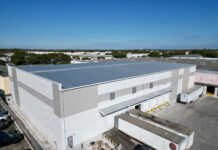
It started up the new tissue machine at Wetherill Park in Sydney's western suburbs in March 2007. PM1 is a 3.4-m tissue machine from A Celli with a design speed of 2000 m/min. It features a high temperature Premiair hood. It also features a conventional yankee dryer. The energyefficient steam and condensate system for the dryer was supplied by Novimpianti. The machine uses imported NBKP and LBKP from South America and Canada, says ABC Tissue founder Henry Ngai.

PM1 has a design capacity of 45,000 tons/yr. "The tissue machine is not running at full speed yet," says Henry Ngai.

NOVEL PROMOTION

ABC Tissue has numerous converting lines at Wetherill Park for toilet tissue, facial tissue, napkins and kitchen towels, including a fully automated facial tissue line. The lines produce a variety of products and brands, including the flagship Quilton brand of toilet tissue. This premium brand has good surface softness and strength properties, which result from ABC's use of high-quality pulp and its converting knowhow.

In promoting their toilet tissue brands, most tissue makers opt for conventional advertising messages that depict soft, clean images of puppies or memorable jingles. But imagine describing a premium grade of toilet tissue as a product that "loves your bum" and Cupid firing arrows at people's bottoms - could such direct promotion work?

The answer is yes, the creative television campaign from Sydneybased advertising agency Gorilla Communications that was launched in 2005 has worked well. Perhaps the slogan suited the well-known Australian preference for blunt, 'fair dinkum' talk and earthy humour.

At any rate, shoppers boosted Quilton's share of the premium toilet tissue market to top spot. Three-ply and four-ply Quilton had a 25.2% share of the Australian premium toilet tissue market at the end of 2008, according to national chain store scan data. The two competing premium brands - two-ply Sorbent and single-ply Kleenex Cottonelle - followed close behind on more than 23% each. Mid-range, private label and recovered fibre-based grades made up the rest of the toilet roll market. (Note that ABC's competitors point out that market shares fluctuate frequently.)

Apart from Quilton toilet tissue, ABC Tissue also makes Softly brand medium-quality toilet tissue. In facial grades, it makes Quilton premium facial tissue, which holds about 5-7% of the premium facial tissue market in Australia. Its Symphony brand of budget priced facial tissue has about a 9% share of its market. ABC Tissue also produces kitchen towel, and 100% recycled fibre Naturale toilet tissue.

Meanwhile more products are on the way. "We are carrying out plans to expand into other products", says Henry Ngai. The major launch in 2009 will be into environmental products that would reduce wastepaper going to landfill by 25,000 tons/yr, if it takes 100% of it market. Apart from producing its own stable of brands, ABC is also a large supplier of private label brands to leading supermarkets, including Woolworths, Coles and IGA.

ABC Tissue faces tough competition from its domestic rivals. These comprise two global leaders and another privately-owned producer.

What it calls "unfair" import competition is a greater source of concern for ABC Tissue than domestic rivalry, but the recent Australian Customs Service ruling that some imports from Asia were being dumped in Australia could "restore a more level playing field". Customs is expected to apply anti-dumping duties that will slow the flow of imports, but no action will be taken until the Attorney-General's Department completes a review of the Customs ruling.

Meanwhile ABC Tissue and its Australian tissue making peers have been dealt another blow from an unexpected quarter. The Australian government's Carbon Pollution Reduction Scheme, which is decided to put a price on carbon and cut emissions, will drive up their energy costs. "Natural gas prices will rise by 30-40%," says ABC Tissue production

GROWTH PLANS

At the beginning of last year, ABC Tissue's then marketing manager Sunny Ngai announced that ABC/Queensland Tissue Products group had bought land for an expansion in Brisbane, Queensland (Sunny now heads up the management of the family-run company founded by his father Henry). The plan also involved consolidating the Carole Park tissue machines at the new site.

Then, in February this year, Henry Ngai announced the details of this expansion. "We plan to install a 60,000 ton/yr machine", he says. Planned installation is about 2-3 years away at least. The project is delayed by a funding hurdle - that is, the global financial crisis has made banks reluctant to lend. "If it was up to me, I would go ahead with the project now", Ngai says.

The project would give the Australian industry a major boost. But rather than encroaching onto its rivals' shares of the domestic market, ABC Tissue is planning to target its added capacity at export markets.

"We will export to Japan and Hong Kong", says Henry Ngai. He sees an opportunity for premium brands in both of these markets. He concedes that freight costs are an important issue in exporting to distant markets, but he is confident that his good relationships with shipping companies will reduce freight costs to manageable levels. Meanwhile ABC Tissue has already begun to export jumbo rolls to New Zealand and the Middle East, with finished products to Hong Kong.

Finally, Henry Ngai says that his strategy for ABC Tissue is to seek out and pursue growth opportunities. In Australia, that means developing new products, and striving to capture a good slice of growth in the market. "The domestic market grows at 2-3%/yr, and our aim is to catch about half of that", says Henry Ngai. And, as noted above, ABC Tissue is pursuing export opportunities as well. So watch for more developments as this innovative tissuemaker prepares for the next round. TW