Tissue World Magazine


Making the right moves


Von Drehle Corporation's three US converting facilities have grown significantly in the past two years thanks to increased demand for the 100% recycled towel and tissue products it makes and to the 2007 purchase of a paper mill in Cordova, North Carolina. The mill houses two paper machines capable of producing over 50,000 tons/yr of 100% recycled parent rolls.

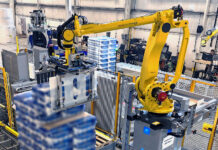
At Maiden, North Carolina, a converting facility was recently enlarged by 6,000 m2, providing it with a total of 21,000 m2 of converting space. A high-speed, automated towel and tissue line from Bretting was added in December 2008.

Additional converting lines include three towel and tissue lines from PCI and Perini and a single-roll bath tissue line from Consani, all of it installed since 2002. The Perini high-speed automated line for jumbo roll tissue, centre-pull towels and hand-wound towels started up as recently as September 2007.

Future plans at the facility include the addition of a high-speed, automated single-wrap bath tissue line this year,and new high-speed automatic lines as needed.

In Memphis, Tennessee, in 2007 von Drehle sold its existing converting building, that dated from 1999, and a larger building was purchased. This new 16,000 m2 facility can produce nearly 4 million cases/yr of finished product from its five converting lines: a single-roll bath tissue line from Consani that started up last October and four Perini towel and tissue lines. The company plans to add a second single-wrap bath tissue line here this year, with additional lines as needed.

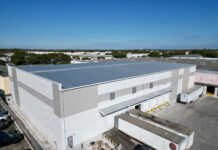
The 6500 m2 Las Vegas facility was opened in May 2005 and has capacity of over 2 million cases/yr of finished product. It currently contains two lines, one each from PCI and Consani, for centre-pull and hand-wound towels but plans are already in the works to expand. A single-wrap bath tissue line is being added this year.

In addition to plans to add more lines at the plants outlined above, von Drehle also intends long-term to add a converting facility in the north-east and a paper mill in the western US.

One of the key aspects of the company's activities is its emphasis on what it calls "total environmental responsibility and conservation". Every parent roll produced at the Cordova mill is made from 100% recycled paper. It contains 50-57% post consumer content that may contain inks, clays and other impurities.

Many facilities use harsh, hazardous chemicals in these processes, including chemicals and compounds such as chlorine, chloroform, lead, chromium, mercury, nickel, etc. von Drehle does not use such potentially harmful chemicals, it says.

It is, however, investing millions of dollars to upgrade its deinking and cleaning capability. When completed, this will allow it to run a wider variety of waste paper and save water.The paper mill now uses only about one-third the industry standard of water, says von Drehle. With the new deinking facility, it will use about 90% less water than the industry average for an annual savings of nearly 1.8 billion litres of water.

The sludge from the deinking/cleaning process, which primarily consists of clay and ash but also contains the inks removed from the waste paper, is used for soil improvement programmes. von Drehle takes the sludge, spreads it on large tracts of land, ploughs it into the soil and grows cover crops. This improves the soil and also diverts about 2500 dump truck loads per year from landfill.

Another improvement is the conversion from diesel fuel to propane as a back-up fuel source for natural gas. The propane burns cleaner and, unlike diesel fuel, it does not have a shelf life. Diesel fuel must be reconditioned every few years, resulting in additional cost and waste.

With these and other environmentally-friendly practices, the company seems to gain on all fronts. It is seen to be doing the right thing, it puts products on the shelf that an increasingly eco-conscious market is eager to use, and it can also save money while doing it. Clearly, given the expansion described above, a strong business model. TW