By Charles Yip
Fook
Woo was founded in 1968 when Hong Kong was building its infrastructure
and numerous cement bags generated by building and construction
works were to be collected for exporting to Japan. During the
early stage of industrialisation in the 1970s, carton case
makers, who supplied to many textiles, garment and wig factories,
generated large quantities of corrugated trims for Fook Woo
to collect . The collected wastepaper was exported to nearby
Asian countries such as Taiwan, the Philippines, Korea, Thailand,
Indonesia and Vietnam.
In the 1980s, Hong Kong's high precision printing industry prospered.
The industry needed Fook Woo to help dispose of much of its waste.
These waste materials were a good source for recycled paper. The
change of Hong Kong from an industrial to a commercial hub in
the 1990s offered Fook Woo another opportunity in the office waste
collection business.
MOVING INTO CHINA
Increasing labour costs in Hong Kong and the
opening of the China market in the 1980s accelerated the move
of many labour-intensive industries to Guangdong province, in
the south of China not far from Hong Kong.
In 1993, Fook Woo started its wastepaper collection activities
in China when most of its Hong Kong clients moved their factories
to China. Fook Woo helped all these clients, including carton
makers and printing factories - to dispose of their wastepaper.
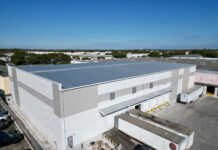
With a view to efficiently managing and making use of the collected
wastepaper, Fook Woo built its own tissue factory in Huizhou,
China, in 1998 to manage the collected office wastepaper and recycle
it into personal paper products.
POTENTIAL TO GROW
China has become the most important tissue
making, consuming and exporting country in the world. According
to Euromonitor 2008, the per capita expenditure on tissue paper
in 2006 was US$3.2 as compared with that of the United States
and the Western Europe with per capita expenditure of over US$40.
There is room in China for the tissue market to grow.
The current Chinese tissue industry mostly involves the consumption
of virgin pulp and very few producers are using recycled paper.
Similar to the overseas tissue markets, China will in the long
run need to use more recycled paper for both cost reasons and
environmental concerns. Fook Woo expects to benefit from its growing
supply of waste collection and growing demand for recycled paper
products.
There are three main types of wastepaper - newspaper, carton
case and mixed paper, which can be collected from the following
sources:
- Industry - carton case makers and printing factories
- Household - residential and public buildings
- Commercial - offices, shops and department stores
- Institutes - banks, security companies, government departments.
- In China, currently the main source of wastepaper is from
industry, while in Hong Kong all the above sectors contributes
significant volumes.
Fook Woo maintains over 100 trucks and eight different depots
to collect and bale the wastepaper in Hong Kong.
Unlike other wastepaper collectors, Fook Woo has operated its
own transportation team at piers in Hong Kong and China. The sea
traffic can efficiently transport the collected wastepaper from
Hong Kong to the company's production facility in Huizhou, China
within a short period of time (as short as 10 hours).
Fook Woo is one of the leading manufacturers of recycled personal
paper products in China. The company is also one of the leading
vertically integrated providers of recyclable waste management
services in Hong Kong. Fook Woo has established long-term relationships
with wastepaper suppliers to safeguard a stable supply of wastepaper
at competitive cost.
As the PRC government tightens its environmental protection
requirements, companies which cannot comply with these requirements
will be forced to close. Being a company with high management
quality and control, Fook Woo is poised to benefit from the market
consolidation.
FUTURE CHALLENGES
The main challenges in producing high-grade
paper from wastepaper are:
- to maintain stable sources of supply;
- to establish a vertically integrated process of waste paper
collection and
production of recycled paper product; and
- to reduce the pollution and production cost.
Fook Woo plans
to expand and
upgrade its existing production facility in Huizhou to meet the
growing market demand. The company also seeks to continue to
improve its efficiency and quality by further investing in its
Huizhou production facility.
The main marketing challenges are:
Branding: Fook Woo distributes
under the brand "Moon" in
the Guangdong province.
The sales outside Guangdong are channeled through Wal-Mart. Fook
Woo plans to develop a national brand to expand its market coverage
in China.
For overseas sale, Fook Woo mainly distributes OEM products
to Australia and the United States. In the long run, Fook Woo
plans to distribute its own brand for the global market.
Distribution: When a national brand is established, a nationwide
sales network will be essential to support the distribution of
products to customers. The company is also open to strategic cooperative
partnership opportunities in production and marketing.
SOCIAL RESPONSIBILITY
Other than engaging in the environmental
activities and efforts to keep Hong Kong and China clean and green,
Fook Woo has contributed to communities with donations to hospitals,
schools and other charity organisations.
Chairman Eddy Leung has received honorary citizenship from Huizhou
City and is also a committee member of the Huizhou Committee of
Chinese People's Political Consultative Conference. He is the
founding chairman of the Hong Kong Waste Chamber, chairman of
the New Territories North District Federation of Industry and
serves many other public roles in non-government organisations.
On a rather different plane, he has also won the overall Championship
of Hong Kong Bonsai plant competition a number of times.
As one of the leading vertically integrated providers of recyclable
waste management services in Hong Kong, Fook Woo has collection
centers in Hong Kong, Guangdong and Shanghai and will continue
to identify other locations in Northern China. The company is
also carrying out a feasibility study for a production facility
outside Guangdong.
Looking ahead, Fook Woo aims to become the largest provider
of recyclable waste management services and the largest manufacturer
of recycled personal paper products in China.