Tissue World Magazine


World News
Europe


SWEDEN
STFI SEMINAR ON R&D AND TRAINING

Wepa Müschede has started using Voith's new SolarSoft polyurethane cover for the pressure roll on PM 6, completely cutting out the need for water cooling. This has resulted in major cost savings in maintenance, according to a press release from Voith.

"Until now the pressure roll was covered with rubber covers, therefore water cooling was absolutely necessary. Some time ago the water cooling failed and the rubber cover was destroyed within a few hours. The maintenance costs for the cooling were very high. Now SolarSoft is in operation without cooling since several months. During the next planned downtime the cooling will be permanently removed. This saves us time and money", says Stephan Frank, plant manager of Wepa Müschede.


RUSSIA
SYKTYVKAR STARTS UP NEW METSO MACHINE

Syktyvkar Tissue Group Ltd started up its new Metso tissue line on 17 September in Syktyvkar, Republic of Komi, Russia. The new line comprises Metso stock preparation equipment and an Advantage DCT 100 tissue machine including OptiFlo headbox, Metso yankee cylinder, Advantage AirCap hood, Advantage WetDust dust management system as well as air and ventilation equipment. The new PM2 is a 2.7-m-wide tissue machine with design speed of 1600 m/min and a daily production of 60-90 tons.

The Syktyvkar mill, since 2003 operated by Syktyvkar Tissue Group, has made tissue for more than 20 years. With a market share of around 10% it is currently one of the best known companies on the Russian tissue product market. The company, employing close to 400 persons, produces 20,000 tons/yr of tissue in a grammage range of 17-32 g/m2, sold as base tissue and as different converted products. The Group's headquarters and production facilities are located in Syktyvkar, capital of the Republic of Komi in northwestern Russia.


SOVETSKY LOOKING FOR BUYER IN RUSSIA

Sovetsky Pulp and Paper Mill is currently on the lookout for potential buyers for its pulp and paper businesses in Sovetsk, the Kalinigrad region in western Russia.

The company has been enduring financial problems following its switch from sulphite to viscose pulp in April and a big fire at the plant in June.

According to a spokesperson, unfavourable conditions in the viscose pulp market aggravated the situation and led to the stoppage of the pulp production. "Although the paper and corrugating divisions remain profitable, we are not able to meet our loan obligations. We took a decision to sell our businesses in a hope to retain production at the facility," the spokesperson explained.

Sovetsky Pulp and Paper Mill can produce 80,000 tons/yr of unbleached viscose pulp. It also manufactures 24,000 tons/yr of tissue and 60,000 tons/yr of fluting, testliner and kraft paper on four paper machines.

News from RISI (www.risiinfo.com)


ITALY
CARTIERE LUCCHESE BUYS NOVACARE FRANCE

Cartiera Lucchese Group has acquired a new plant in France. The plant, formerly owned by Novacare SA., is located in Laval Sur Vologne area (Vosges department, in the Lorraine region), close to the German border. It has two tissue machines and seven converting lines and an output of 46,000 tons/yr of recycled tissue.

The acquisition is made through a new French company, called Novatissue SAS, 100% owned by Cartiera Lucchese spa. The terms of the agreement include the employment of 229 Novacare employees and the ownership of all Novacare tissue brands.

Laval sur Vologne plant is located 250 km from the other Cartiera Lucchese Group French plant (managed from Lucart France sas). By means of this acquisition Cartiera Lucchese Group will be able to reinforce its position in the French and north European tissue markets, specifically in the AfH segment and for ecological tissue products. Moreover, Lucchese says, the acquisition will allow the company to obtain important synergies among all group plants in terms of production, logistics, sales and marketing. Some equipment modifications that will increase production efficiency and quality level have already been planned.

"Reasons for this acquisition lie in our wish to strengthen our European Away From Home market share and to increase our production capacity of ecological tissue products in north Europe," says Massimo Pasquini, CEO of Cartiera Lucchese. "Novacare plant is perfectly in line with all these targets" Novacare was established in 1931 with the name Papeteries Mougeut. This was changed to Novacare in 2003.

Today more than half of Novacare's tissue turnover is in the AfH market in France, Germany and Benelux, while the remaining part is sold as private labels to the main supermarket chains operating in France.

Plans for biomass boiler
Cartiera Lucchese has filed an application for planning permission for a biomass energy generation plant in Diecimo - Borgo a Mozzano, near Lucca in Italy. The plant, to be built in Diecimo, will recover energy and other reusable materials from mill waste produced in deinking operations in Diecimo and Porcari, as well as from wood waste from ongoing operations in the surrounding forests.

Further details on the project will shortly be available on the company's web site www.lucart.it. Public presentation of the project was due 25 September.

EUROPE DP PACKAGING LAUNCHED AT MIAC

Stands at the MIAC exhibition held in Lucca in October. Among developments announced at the show was the creation of dp packaging technology, a new company based in Italy that intends to provide a complete range of packaging machines for the tissue business. Futura engineer explains the technology to a visitor at the company’s open day during the MIAC event.


EUROPE
EUROPEAN SECTOR REACHES NEW HEIGHTS IN RECYCLING

The European Recovered Paper Council (ERPC) has announced that the paper and board recycling rate in Europe reached 64.5% in 2007, which confirms that the industry is on track to meet its voluntary target of 66% by 2010. The total amount of paper collected and sent to be recycled in paper mills was 60.1 million tons, an increase of 7.6 million tonnes (or +14.5%) since 2004, the base year for the target. "Our 2007 Monitoring Report shows that the paper value chain is on the path to performing better and being more sustainable. Europe is already the global champion in paper recycling - in millions of tonnes and in knowledge - but the industries along the paper value chain have nevertheless raised the bar even further. We are all working hard to reach the target set in 2006 in the European Declaration on Paper Recycling", said Anders Hildeman, ERPC Chairman. For more information, erpc@cepi.org or visit www.paperrecovery.eu


PORTUGAL
ARTIK WHITE, THE WHITEST OF THE WHITE

Having pioneered a whole range of solid colored products available on up market trade channels, Renova has now decided to complete the creation "the whitest toilet paper ever", the company has announced.


FAPAJAL ORDERS TOSCOTEC PM FOR SÃO JULIÃO

Fapajal - Fábrica de Papel do Tojal SA has selected Toscotec SpA for the supply of a 70 tpd tissue paper machine to be installed at Fapajal's mill in São Julião do Tojal, Portugal.

The mill, which was was purchased by a group of investors in a government-sponsored privatization in 1999, has in recent years upgraded the mill. It has added a deinking plant, effluent treatment, a co-generation plant and, most importantly, a converting line dedicated to the away-from-home market. Today Fapajal produces virtually all the sanitary paper products required by the institutional market, as well as paper tablecloths, serving clients in Portugal and Spain.

The current investment project constitutes the next phase in Fapajal's strategic plan. The mill's current capacity (25 tons/day tissue paper and 10 tons/day paper for tablecloths) will be increased thanks to the addition of 65 tons/day of tissue. The aim is to supply independent converters with the production of the new machine, while dedicating the current output to Fapajal's own converting and specialty papers.

Toscotec's scope of supply includes the upgrading of the existing stock preparation plant with the modification of the water system and of the broke line, a new approach flow system, Modulo Plus tissue machine with relevant auxiliaries, slitter rewinder complete of stretch wrapping unit and electrification and control system including a quality control scanner.

The Modulo Plus is a crescent former unit with a daily production of 65 tons/day, an operating speed of 1300 m/min and a net paper width of 2.75 m. The machine will feature a 3200 mm steel yankee dryer. Toscotec will also supply supervision of the installation, start-up assistance and a training program for mill staff.

The start-up is foreseen for the third quarter of 2009.


ROMANIA
MONTE BIANCO TO START UP NEW MACHINE

SC Monte Bianco SA, based in Pucioasa, Dumbrivita County in Romania, is about to complete the installation of a tissue paper production line in its recently acquired mill of Targoviste (20 kilometers from the Pucioasa headquarters).

The OBL's turnkey projects includes the complete rebuilt of a second hand 20 ton/day PM and machine auxiliaries, new pope, stock preparation plant for virgin pulp, a four-ply tissue rewinder, electrification. The rewinder is designed to produce up to 100 tons/day of specialty tissue paper jumbos; the start up of the paper mill is foreseen for the beginning of 2009.

Monte Bianco (a Turkish-Italian owned company) is one of the most important actors in the Romanian market and with its brands Puff, Fiore and Best has a market share near to 15 %.

"We have been the first Romanian converter producing 'punta-a-punta' kitchen rolls since 2004 and we have recently finalized orders to CMG and KPL Perini to improve our converting activities: with this investment in paper production we intend to confirm our innovative nature making available to the Romanian market special tissue products," said Mr Willy, the Italian shareholder in the company.


GERMANY
VOITH PAPER BUYS HOOD SUPPLIER PREMIAIR

Voith Paper acquired PremiAir Technology Inc of Montreal, Canada on 1 October. PremiAir, which is active in the area of air systems for the pulp, paper and tissue industry, specializes in yankee drying hood systems. It has several hood references operating at temperatures up to 650° C. Dust and mist removal systems, heat recovery systems, and all services to assess and improve existing installations are part of the product and service portfolio.

PremiAir will be embedded in Voith Paper's Air Systems Group with locations in Bayreuth, Mönchengladbach (both in Germany), and Montreal, Canada. By this acquisition Voith Paper Air Systems completes its portfolio of products and services in all areas of air systems for the pulp, paper, and tissue industry.

Thanks to this acquisition Voith Paper's Tissue division headquartered in Sao Paulo, Brazil, is now able to provide complete tissue machines starting from stock preparation and ending at the rewinder/roll transportation system, the company says.


COLLECTORS' CORNER
A GLIMPSE INTO THE HISTORY OF TISSUE POCKET PACKS

For as long as people have enjoyed leisure time, they have loved collecting things. Today, alongside the well-known collectors' pursuits - rare animals and plants, stamps, coins etc - there are groups with an astonishing range of interests. The American Association of Collecting Clubs numbers many thousands of organisations dedicated to a particular activity. Among the objects their member clubs collect are thimbles, insulators, barbed wire. They have specialists in telescopes, textiles, tiles, toasters and so on, but from that last alphabetical list one item of importance to our readers is missing - tissues. A search on Google turned up not a single club devoted to this particular interest group.

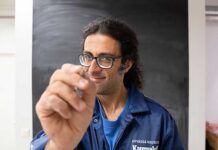
That is not to say there are no such collectors. Indeed, Tissue World had the privilege of meeting one at MIAC in Italy last month - and quite a collection he has. Silvio Fioravanti, a young archaeologist from Lucca, has close to 6000 different pocket packs collected over the past 12 years.

To start with, as a 15-year old, he started buying in the local shops, attracted by the diversity of the packaging. By 2000, he had hundreds and his collection had started to go international. Today, he has packs from 63 countries. More impressive, perhaps, he has packs dating from the early 1930s, quite a rarity given the disposable nature of the product. Pocket packs of hankies were introduced by Tempo in 1929, Fioravanti told Tissue World. The packs were square, wrapped in paper and contained 20 tissues. In 1932 Kleenex launched its brand, but K-C focused mainly on boxes and the pocket packs are extremely rare. Fioravanti's earliest pack of Kleenex dates from the early 1940s.

The modern format was generally adopted in the 1960s in the west, it seems, though the packet was still paper based. Plastic packs were introduced in the 1970s, the adhesive opening in the 1980s. In other parts of the world, development has been different. In Japan, for example, they prefer flat packs (Fioravanti has 500 of them).

His personal favourites are some of the older and rarer examples and the occasional commemorative pack, such as those made for the Olympic Games - he has packs from Barcelona and Salt Lake City.

In the absence of a central forum for collectors, he trades on eBay and exchanges with other collectors. In Italy he knows 10 others, in the whole of Europe about 35.

His whole collection is catalogued, computerised and stored in series of numbered boxes, as one might expect from a trained archaeologist who has to tag and categorise thousands of fragments from excavations. The collection is all photographed and available on his web site http://www.silviofioravanti.it.